fbpx

Category: Prams

  • Expensive Yet Essential: Why Prams & Strollers Cost a Fortune

    Expensive Yet Essential: Why Prams & Strollers Cost a Fortune

    Prams and strollers are expensive — let’s get that out of the way. So, you might be scratching your head in confusion as to why anyone would pay more than they had to purchase an expensive product such as a stroller. But here is the thing: prams and strollers are an essential purchase for your baby. They carry them through the problematic infant months, ensure they’re safe, and help alleviate some of the horrors of post-childbirth when traveling or just out-and-about with your child. To make sure that you are making an informed decision on a purchase, look at what it will cost, why it costs so much, and see if that price is worth it.

    There are many reasons why prams and strollers are expensive in Australia.


    Let’s take a look at two of the most common reasons that you may want to consider when making your next purchase:

    • High retail markup – The price difference between buying a stroller from an online retailer, or going into a store, can be pretty substantial. Some retailers often see the opportunity to charge more for products when they can sell them quickly and easily over the internet or through their physical stores. This makes sense since they don’t have as many overhead costs (like rent) associated with selling these items compared to other stores that need to pay rent each month.
    • High demand – When there is high demand for something, people will pay more money for it; this includes pram and stroller models and other baby accessories such as clothing sets or toys! This means that if you want quality products, then you will have no problem finding them at an affordable price because everyone wants what works best for their baby, too, so everyone tries hard not only to save money but also to get what works best instead which means less time wasted on research before purchasing anything which means saving even more money!
    Pram and Stroller Prices in Australia

    Prams and strollers are more expensive in Australia than in the UK or USA. The quality of the prams and strollers can be excellent. However, the prices vary depending on features and brand name.

    The prices depend on the size of the pram or stroller: small to large; for babies up to toddlers, preschoolers, or kids of all ages (4-12 years old).

    The cost may vary depending on whether it’s a new or second-hand model.

    You need to decide what features you want before buying your baby gear, as so many choices are available today!


    Top Brands of Prams and Strollers in Australia

    There are a lot of brands that make prams and strollers in Australia. Some of them are cheaper than others, but the most popular brands are also the most expensive. These include:


    • Baccani
    • BabyBee
    • Baby Bunting
    • Baby HQ
    • Phil & Ted’s
    • Mountain Buggy
    • Bambini
    • Bugaboo


    These are a few companies that have been around for years, so it’s no wonder they get a lot of attention. They also offer high-quality products with beautiful designs and features—the perfect combination of style and practicality! The prices reflect this, however; while you can find some models starting at $300-$400 online, many start closer to $800 or more—these prices will only go up from there!


    What makes a pram or stroller so expensive?


    Many factors contribute to the high cost of a pram or stroller. The first is the retail markup. The retail markup is the difference between what consumers pay for a product and what manufacturers charge for that product, plus any additional service fees (such as taxes). In Australia, this is often between 200 and 400%. This means that if you buy a new stroller for $300, the retailer will sell it to you for $600 (or more).

    The next factor contributing to your stroller’s price is quality control. The quality control process is fundamental when making a product that hundreds or thousands of people will use. Prams are made in factories, but the quality of the materials and the assembly must be carefully checked for defects. In addition, the production process must be monitored to ensure that every piece is made to specifications, which means that some parts have to be inspected more closely than others.

    Next on our list is manufacturing costs – these include materials such as steel, aluminium, and plastic, as well as shipping and transportation costs from overseas factories to Australian warehouses before being sold in stores like Woolies or Kmart. The cost of manufacturing prams and strollers involves more than just the raw materials used in making them—it also includes labour costs associated with production and overhead expenses like rent, electricity bills, utility fees, insurance premiums, and taxes. These costs must be covered before selling products at market value.

    Then we have research and development, which includes all design work associated with creating new products plus any testing required by safety authorities before they can be released into the marketplace. To develop new products with specific features that customers want, companies often need years of research and development time before they reach the prototype stage. This investment may not be recoverable if there isn’t enough demand for new products within a reasonable timeframe; however, if there is sufficient interest in a new product, then it could be developed relatively quickly.

    Marketing costs include advertising fees spent on TV adverts during prime-time programs when families might be watching them together rather than purchasing prams & strollers at discount stores like Target or Big W where discounts may apply. Still, there wouldn’t be any ads shown anyway, so consumers would miss out on seeing what’s available in-store without paying full price just because they didn’t know about them beforehand!

    Finally, brand loyalty comes into play here, too, because when people see certain brands advertised continuously over several weeks/months, then they’re likely going back again after having seen those advertisements repeatedly; so even though companies spend money trying their best not to spend much more money than necessary just so they don’t go bankrupt while still trying to keep their head above water financially speaking – hence why many end up not making any profit whatsoever despite investing lots of money into various marketing campaigns.

    How to save money on buying a pram or stroller?

    You can save money on buying your next stroller or pram in several ways.

    • Buy second-hand. If you are looking for a high-quality, second-hand pram or stroller, it’s essential to follow some simple guidelines:
    • Make sure the product is in good condition before buying it and be willing to pay less than the retail price (you might have to haggle).
    • Check that all parts are included and in working order. If there are any missing parts, they should be replaced or purchased separately before using the product.
    • Buy online and save yourself time and money – especially if you live outside of an urban area where stores may not stock this type of product in-store anyway!
    • Look out for sales at department stores like Myer, David Jones, or Target, as well as discount stores like Crazy Clark’s, etc., which often have sales during school holidays when parents are looking at getting their kids some new gear!


    You can do some things to get good value for money when buying a pram or stroller.

    If you are looking to purchase a new pram or stroller, there are some things you can do to get good value for money.


    The internet has made it easy to find second-hand items, so if you’re on a tight budget, this is one option worth considering. You might even luck out by finding a family giving away their old pram because they’ve found something better! If you do go on this route, check the item carefully before purchasing and ask lots of questions about its history and how well it was looked after. The seller must know how much it’s worth, so they aren’t selling at a loss just because they’re desperate to get rid of it!

    Buying from big brands like Mountain Buggy means you can be rest assured that the quality will be high. Any warranty claims won’t be rejected by an uncaring company that doesn’t want to honor its customer service promise.


    Pro Tip: Try Baccani


    Baccani is a company that has been providing high-quality prams, strollers, and other baby products for many years. They believe in providing the best quality products at affordable prices, so everyone can afford to buy their products.

    They know you want to get the most out of your budget when buying things like prams and strollers. That’s why they make sure that the products are made from high-quality materials so that they’ll last a long time and look great while doing it!

    Baccani also provides free shipping on all orders within Australia and free returns if you’re not 100% satisfied with your purchase. You can check their latest products, deals, and offers through https://www.baccaniprams.com.au/

    We hope you find the above answers helpful and informative. Baccani Prams & Strollers is the right place to visit if you’re looking for the best prams and strollers. For all your inquiries about the Baccani line, feel free to leave a message on their contact page. If you have any questions or comments regarding this article, please feel free to leave them below. Until next time!

  • Getting Your Baby to Sleep: Parenting Essentials

    Getting Your Baby to Sleep: Parenting Essentials

    Babies and toddlers need a lot of sleep!

    Babies need a lot of sleep. They normally require 12-16 hours per day to grow and develop properly. You must get your baby on a regular schedule as soon as possible so that you can keep track of their sleep schedule without any issues. If you’re having trouble getting your child to sleep at night or during naps, it might be because they are not getting enough rest during the day. Sleep deprivation can lead to many problems for infants and parents alike, such as accidents and injury (from falling off furniture), stress, depression, and anxiety for both parties involved, etc.


    Don’t be fooled! Babies are not that great at sleeping.

    Babies are not great at sleeping. If you have a baby and have trouble getting your little one to sleep, you’re definitely not alone. There are many tips and tricks that can help—like swaddling them, putting them on their backs, or rocking them to sleep—but sometimes these things don’t work for everyone.

    If your child is old enough to roll over or sit up by themselves in the crib, it’s time for something more radical: letting them cry it out (also known as controlled crying). This method involves leaving your child to cry for a while every night until they fall asleep on their own without being rocked or fed back to sleep. For some people, this seems cruel; however, there are several benefits associated with controlled crying, including better self-soothing skills in children who do not develop an attachment disorder from being held all the time!

    Important: It’s also been shown that babies who sleep on their backs have fewer problems than those who prefer sleeping on their tummy, which is not recommended as it increases the risk of sudden infant death syndrome. (SIDS)

    Sleep deprivation has been linked with both physical and psychological issues, so we must provide our babies with adequate rest.

    Getting Your Baby to Sleep

    First and foremost, your baby needs you to be a responsible caregiver.

    Some people may say that the number one essential for getting your baby to sleep is having a responsible caregiver. That’s where it all starts. You should pay attention to your baby 24/7 and learn their patterns, their responses, and how they react to different activities. Once you’ve got the basics down, the rest of it comes afterward.


    Create a safe sleeping space for your baby 

    When setting up a nursery, new parents often buy a cot and decorate the walls before thinking about their child’s experience in the room. But if you want your baby to sleep well and for long periods, it is essential to consider how they feel in their environment. Research shows that babies exposed to things like bright lights or noise before they go to sleep end up having more trouble falling asleep at night.

    In order to create a safe sleeping space, you will need first need a bassinet or crib that is at least 16 inches off of the ground. Your baby can be put to sleep in a cot or maybe a crib. Either way, it’s important to ensure that your baby has a safe and comfortable place to sleep. You’re probably already aware of the dangers associated with unsafe sleeping environments for babies, but we will go over them again just in case you missed it!

    The safest place for your child is their own bed, so try not to be too worried by this list if they are still napping and sleeping on a mattress next to yours rather than being moved into their own room at night time.


    Ensure that the cot is safe.

    • Never use a second-hand cot.
    • Make sure the cot fits the mattress.
    • If you’re buying a new mattress and cot, make sure it’s compatible with each other.
    • Ensure that your baby can stand up in their cot and not touch anything above them (unless it’s a guard rail).


    Set up your nursery with your baby’s safety and comfort in mind

    Once you’ve chosen a cot and mattress, it’s vital to set up your nursery with your baby’s safety and comfort in mind.

    • Follow the instructions on the cot and check it regularly. It should be fixed securely to the wall using brackets designed for this purpose. If you’re not sure how to do this or can’t find instructions, contact the manufacturer of your particular model—they may have additional tips for making sure that it’s safe to use.
    • Check that there is no gap between any bars or slats of the cot—this could trap fingers or toes and cause injury if they move in their sleep (or yours). Make sure that there are no sharp edges around any part of the frame (e.g., corners), which could hurt them if they roll over onto them during their night’s rest!
    • Ensure that there is plenty of ventilation around them in their bedroom—this helps keep them cool during hot weather, which will help them sleep better at night because they won’t be too hot to doze off properly! Plus, air movement keeps away insects like mosquitos which might want nothing more than biting into soft fleshy bodies.

    Getting Your Baby to Sleep

    Comfortable Sleepwear

    To help your baby sleep well, you should dress them in soft, breathable, and comfortable sleepwear. Cotton is the best material because it breathes well and doesn’t get too hot for your baby. It’s also worth keeping the room cool since overheating can cause restlessness and make it harder for them to settle down at night. Dress your baby in one layer more than you would wear yourself – so if it’s summertime, make sure they have something lightweight on under their pajamas or sleepwear. If you’re worried about your baby getting cold, use a sleep sack to keep them warm but still allow airflow around their body.

    Swaddling Blankets

    Swaddling blankets are great for baby sleep. They provide reassurance and comfort to your little one, keeping them warm, snug, and calm. Swaddling blankets can also help prevent SIDs (sudden infant death syndrome) and the startle reflex that some babies exhibit. Additionally, swaddled babies tend to sleep longer than unswaddled ones—and there’s nothing more important than getting good sleep when you’re a new parent!


    Sleep Sacks

    Sleep sacks are a safer alternative to blankets, which can pose suffocation and strangulation risks. Not only do they help your baby sleep better, but they’re safer than pillows, too! Sleep sacks are made of breathable fabric that allows air to circulate. This means babies can breathe freely throughout the night and stay cool when it’s hot out.

    • Purchase a size that fits your baby well. Infants should wear sleep sacks until they reach 4-5 months old; toddlers typically wear them up until age 2-3 years old (or longer if you keep them in their crib). It’s essential to get a size that fits snugly without being too tight, so your child doesn’t kick off the blanket during the night—and make sure it’s long enough, so it doesn’t ride up over their face!


    Blackout Curtains

    Blackout curtains are the best way to darken the room, which means better sleep for your baby. Parents will also benefit from them because it’ll help them get a good night’s sleep too. Not only does this block out light and sound, but it helps create an environment where you can relax and unwind before bedtime, making it easier to fall asleep faster.


    White Noise Machine and/or Music Player

    White noise machines, also known as sound conditioners, can help drown out distracting noises and create a soothing environment for your baby. This can include noises like rain or waves crashing on the beach. A music player could be something like an iPod or an Echo Dot that you leave in your child’s room. If you choose this option for white noise, make sure you don’t play too much music because it may keep them awake!

    Some parents use both at once: they play classical music through speakers while simultaneously using a white-noise machine to create an even more calming environment for their little ones.

    If none of these options works well enough, try simply leaving on the television or radio until your baby falls asleep—that way, they’ll hear familiar sounds while being lulled into dreamland by some soothing tunes!

    Getting Your Baby to Sleep

    Lavender Bath Products & Essential Oils

    Lavender is a calming scent that can help your baby sleep. It’s also an essential oil that you can use in bath products, diffusers, or humidifiers. If your baby has sensitive skin, look for a lavender-based lotion or body wash instead of using lavender essential oil directly on their skin.

    Rocking Chair or Glider

    A rocking chair or glider is a gentle way to soothe your baby. The motion of rocking or gliding helps settle your baby and can also be used for feeding, cuddling, and later on for reading books.

    Many parents continue to use the same rocking chair or glider they started with during the early days of their baby’s life because it’s still the best way to unwind after a long day at work.

    A Comfy and Cozy Lovey

    A lovey is a comfort object. It’s a small, soft item that children use to help them feel safe and secure when they’re away from their parents or other loved ones. It can be an object like a blanket or stuffed bear, but it doesn’t have to be—it can also be something inanimate like a teddy bear lamp shade or flat blankie.

    Most experts recommend getting your child one as soon as possible to have something to hold onto while they sleep at night and during the day when they’re feeling lonely (or just bored!). If you don’t already have one on hand, try looking for these items at your local thrift store:

    • A favourite stuffed animal
    • A doll
    • A photo of you holding your child up high in the air (so long as it’s not digitally altered!)
  • Handle With Care: Safety Tips To Handle Your Stroller

    Handle With Care: Safety Tips To Handle Your Stroller

    Imagine this; you are in the prime of your life; you are, as the saying goes, “young, wild and free.” You cruise through life without an ounce of care in the world, and bam! You have a baby on the way.

    DEFCON-1!

    Once your baby comes along for the ride, all notions of risk and tomfoolery get thrown out of the window. It’s time to get rid of your ‘no time for caution’ mentality and buckle up for a long ride of safety, caution, patience, and responsibility. Do not get anxious, though; it is not something you cannot handle with a little bit of information and a possible prep level.

    Your little one will soon become ready to step into the outside world and take a stroll along with their mommy or daddy. Ideally, you should have a completely functional and fully equipped stroller prepared to go when it comes to that point.

    (For the best prams and strollers in New Zealand, visit: https://www.baccaniprams.co.nz/)

    Modern strollers often come equipped with the best safety features. They are manufactured according to international safety standards and are compelled to follow many guidelines before being made available for purchase. It’s all good, yes. But regardless of the guarantees provided by the manufacturer, you, as a parent, have a part to play in this ordeal as well.

    Let’s look at a few tips on how you can handle your stroller in the safest way possible:

    1. Check for Standard Requirements by the Manufacturer 

    When you purchase your stroller, you are given assurance of the standard safety requirements from the manufacturer. These standard requirements include the locking mechanism in the wheels and the seats, a proper harness, belt and safety mechanism, and the required warning labels.


    Read our locked-and-loaded-the-ultimate-pram-stroller-safety-guide to learn more about standard stroller safety requirements.

    With that out of the way, here are some tips on what you can do from your end to ensure your baby’s safety:

    1. Keep Your Baby Close 

    It has been scientifically proven that your baby is more comfortable when you are within their range of vision. It provides them with a psychological boost and has a calming effect. This goes both ways as well. For you as a parent, it is always better to have your baby within your sight to remain as calm and as comfortable as possible. It reduces the level of anxiety on your part, and you can obviously concentrate better with the rest of your work, knowing that your baby is safe and sound.

    When handling your stroller, you must place one hand on it at all times. However, it is understandable that this is not always possible. But, whenever it becomes difficult, we recommend that you exercise enough caution to place yourself at a range where you can grab the stroller or your baby in case the need arises. It can be an emergency or just the simple act of consoling your baby when they burst out in tears. Regardless of the situation, however, keep your baby close.


    1. Exercise Caution With Toys 

    Giving your baby a small toy to keep them entertained is a great way to stimulate them and minimize the fuss. You may either use a small, vibrant toy or a noise-making toy to achieve this purpose.

    However, you should exercise caution when handling toys because certain toys can cause a choking hazard depending on the baby’s age. Just keep on the safe side; avoid giving them any toys with removable parts or small enough to swallow.


    1. Double Check the Harness 

    To ensure that your baby is safely tucked into the stroller, you should double-check that your baby’s safety harness is firmly fastened. Howsoever, if you are busy and are in a hurry, a pro tip we can give you is to listen to the click of the harness. If it clicks without an issue, you can rest assured that your baby is safely strapped in.


    1. Park Your Stroller Safely

    Be cautious where you park and leave your stroller. Do not park it in any place that may cause potential harm to your baby.

    Always ensure that it is parked on a flat surface and that the stroller wheels are correctly locked. However, even though the stroller wheels might be locked, we cannot rule out the chances of the stroller tipping over or sliding if it is left on sloped terrain. Avoid leaving your stroller on such a landscape at all costs!

    Apart from this, always keep your baby attended when you are not on the move.


    1. Do Not Leave the Stroller Under the Sun 

    Don’t do it. Just don’t do it. As it is with rainy and windy conditions, prolonged periods under the sun can cause harm to your baby. We understand that you can’t keep moving all the time and that you need to catch a breather. However, find some shade to place your baby, even if the canopy is pulled out.

    Especially during the warmer months, it is quite natural for you to head towards a park or a pool. When doing so, always use the canopy and keep your baby covered from the sun’s rays. And as we said earlier, avoid prolonged periods under the sun as it can heat the metal components of your stroller very quickly and hurt your baby’s sensitive skin.

    1. Do Not Leave Your Baby Overnight 

    Do not let your little baby sleep in the stroller overnight. They might be comfortable in it, but it is unpredictable, and the chances of your baby suffocating in the stroller would increase if left unattended.

    While strollers can be extremely comfortable for babies and can make for an excellent short-term bed for supervised naps, they are absolutely not meant for a whole night’s sleep. They are probably not as comfortable as an actual crib/cot or toddler bed, and there is also the risk of your baby falling out or the stroller tipping over from the baby shifting too much.

    Always put the baby in a proper bed for a full night’s sleep.

    There should be a warning sign on this fact on the label of your stroller.


    1. Do Not Fold Your Stroller Near Your Baby

    Your baby is curious, and it’s beautiful. However, their curiosity does come with some cons if left unattended. When your little one becomes curious and fiddle around the stroller, it may damage their fingers. Make sure that the stroller is folded securely and is kept far away from your baby. The more unreachable it is, the better.

    1. Place Your Bags Accordingly 

    You have to make sure that you keep all the bags in the compartment designed explicitly for that purpose below the seat bottom. It is convenient to hang your purse or small bag around the handles of your stroller. However, do not do this as it increases tipping risk and creates an inconvenience in maneuverability. Keep them in the storage space provided below the stroller, and you can mitigate any risk associated with it.

    1. Maintain Your Stroller Regularly 

    Wear and tear are as dangerous as they come. You always have to ensure that your stroller is in tip-top condition to guarantee your baby’s safety. Read our article on pram and stroller maintenance here.

    Pro Tip: When the grip of your handle starts to wear off, the best thing that you can do at home is to use tennis racket grip tape to wrap around your handles when the material begins wearing off. The tape is made for people to have a good, comfortable grip, and it comes in a variety of colours.

    1. Pay Attention To Recalls

    Return the stroller warranty card so that you will be duly notified in case of a recall. If you’re considering buying a used stroller, check that the stroller hasn’t been recalled.

    In conclusion, the safety of your baby lies in the hand of two parties: yourself and the manufacturer. Purchasing the best stroller possible is vital and playing your part in ensuring your baby’s safety follows in a parallel motion right next to it.


    You can visit our website to purchase the highest quality strollers and prams in New Zealand. If you’re a reader from overseas, follow our blog and immerse yourself in previous articles we have published to learn all about making the proper purchase for your growing family.

    With that note, let us bid your adieu. Do go through these instructions again, and do not shy away from doing a bit of additional research on your own. It’s the 21st century, and Google is your friend. To you and your bub, hope you are well. Good luck and stay safe!


  • Locked and Loaded: The Ultimate Pram & Stroller Safety Guide

    Locked and Loaded: The Ultimate Pram & Stroller Safety Guide

    Like any other product in the consumer market, Strollers and Prams have developed and expanded through the years. These products have undergone profound structural, design, and engineering changes that have guaranteed a better consumer experience along with various technological advancements. New features installed in modern-day strollers cater to making your baby’s ride safer and more comfortable. In contrast, other features are specifically designed to meet the needs and improve the comfort of parents.

    In the past, we have taken you through a comprehensive guide on how to choose the best prams and strollers for your little ones. Today, let us walk you through the specific safety features and security essentials that you should add to your checklist when purchasing the best stroller/pram imaginable.

    1. Safety Standard Label 

    If you’re buying a new pram or stroller, the first thing is to check if it meets the mandatory New Zealand Standard AS/NZS 2088. Look for the New Zealand Standards label, which should be mandatorily placed on the product. If you are unsure, please ask the retailer for the necessary proof of safety.

    1. Restraint System 

    When purchasing a stroller, make sure to choose one with a sturdy safety belt and a crotch strap. These two accessories keep your baby or a toddler from slipping as well as sliding out of the stroller and risking severe injury. Mostly, the safety belt and crotch strap are made out of a thick nylon webbing. According to Australia/New Zealand safety standards and ASTM safety standards, a crotch strap is mandatory when a waist strap is used.

    When checking up the buckles installed on the harness, make sure that you purchase a stroller with buckles that are convenient for you to operate but would be difficult for your baby’s tiny hands to unfasten. It is better if you can shop with your baby so that you can place them in the pram/stroller. This allows you to check if the seat belt is strong, durable, and fits around your child so that it doesn’t cause them any discomfort.


    In some strollers, the safety restraints are limited to waist and crotch straps. We do not recommend that you purchase a model of that caliber. However, you can be rest assured that most modern-day strollers in the market are equipped with an adjustable five-point harness that meets the required safety standards. A five-point harness, much like the safety harnesses found in car seats, have two straps going over the baby’s shoulders, two for the thighs, along with a crotch strap. This mechanism will quite effectively keep your baby from slipping, sliding out, or falling off. It mitigates their ability to climb out of the stroller whenever you need to divert your attention elsewhere. Apart from this, check if the straps are height-adjustable, ensuring a proper fit and if they too are anchored to the stroller securely.

    1. Brake System 

    When testing your stroller out, pay a lot of attention to its parking brake and functionality. Its mechanism should be convenient for you to operate, and the brake should essentially lock two wheels. Having parking brakes operating through two wheels provides an added margin of security to your stroller.

    The mechanism of a two-wheel parking brake may vary from product to product. Some brakes are activated with a single stroke by a bar that is installed in the rear of the stroller frame. In contrast, other brake systems require two actions, which need two foot-operated tabs that are installed above each rear wheel. Regardless of the applying mechanism, when the brakes are activated, the plastic cogs engage with the rear wheel’s sprockets and effectively bring the stroller to a halt.

    In addition to the parking brakes, most strollers are equipped with hand-operated brakes similar to those installed on bicycles. If you use a jogging stroller, this mechanism comes in handy for you to quickly slow down when you’re cruising at a faster clip.

    Remember! It’s all about your convenience. If the brake system hurts your foot when engaging and disengaging the mechanism, just avoid that product. Ideally, you should test it out using light shoes or bare feet. The same theory applies to the hand brakes. If it hurts, move on to the next. Simple as that!

    1. Wheels 

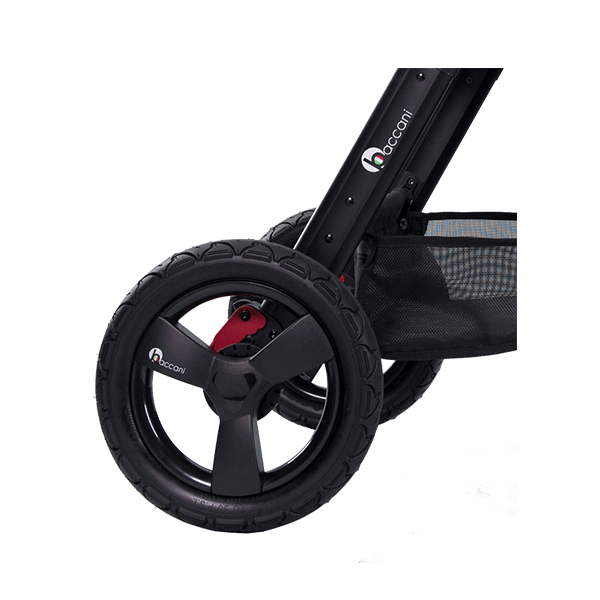
    In current times, it’s almost hard to distinguish SUV wheels from those of their stroller counterparts. (A slight exaggeration, although you know what we mean) Equipped with larger and more rugged wheels, most modern-day strollers come cruising with an almost off-road appearance. However, this does provide a particular functional advantage; the larger the wheels, the easier it is to maneuver your stroller over rough surfaces, curbs, and other unfriendly terrains.

    On the flip side of the coin, when you have larger wheels, this means more trunk space than you can afford when it comes to transporting your stroller in your vehicle. This may create an inconvenience based on your trunk capacity. Therefore, choose a stroller with wheels that suit your convenience in addition to its safety and functionality.

    The Ultimate Pram & Stroller Safety Guide

    Your stroller’s front wheels may or may not swivel based on the type of stroller you buy. Most modern strollers come equipped with two wheels that swivel, making steering a lot more convenient. There are two positions that such front wheel’s feature:

    1. Full Swivel – For smooth surfaces
    2. Forward Facing Lock – For rough terrain

    The mark of a well-engineered stroller has wheels that are aligned uniformly with the ground even when a baby is inside.

    Certain three-wheeled strollers, however, may have a front wheel that doesn’t swivel. We do not recommend such a purchase unless you’re ready for a whole lot of elbow grease.

    1. Leg Holes 

    The leg holes are an essential safety mechanism that should function properly in your stroller. Since your newborn or toddler cannot fully control their movements, the stroller should have leg holes that close, which would not allow an infant to slip through it. Most manufacturers install a mesh, fabric shields, or a hinged and molded footrest that raises and clamp over the leg holes, increasing its security. According to industry standards, a stroller containing leg holes that cannot be closed should not recline fully. This is meant to prevent its use with your newborn.

    1. Canopy 

    As a multipurpose weather protection unit, a canopy is a mandatory accessory that should come with your stroller. Regardless of glaring sunlight, heavy winds, or rainfall, a canopy functions as a protective unit for your baby, who is safely tucked in.

    Canopies are available in a wide range. From a simple fabric strung between two wires to semi-automated pull-down versions that can shield the entire front of the stroller, canopies are available to meet your needs as you wish.

    There are reversible canopies that have the ability to protect your baby from the sun and wind regardless of the direction. Some canopies come with a peek-a-boo feature, a transparent plastic shield on top so that you can keep an eye out on your baby during your stroll time.

    Some Important Safety Tips For You:

    If your child falls asleep inside the pram unless you’re in a position to observe them at all times, it’s best that you move them to a cot. It is dangerous to leave your baby unattended in a pram or stroller when they are asleep. Most babies tend to wriggle around, and this may increase the risk of the pram tripping over. A severe mishap could even result in suffocation or strangulation.


    Annually, several children are hospitalized due to pram or stroller-related injuries. The primary cause of this is the risk of your pram tipping over, due to your baby wriggling while asleep or when they are unattended. Therefore, make sure that you always act with caution and vigilance. As an added safety measure, do not add a large amount of weight to your stroller in the form of bags and shopping items.

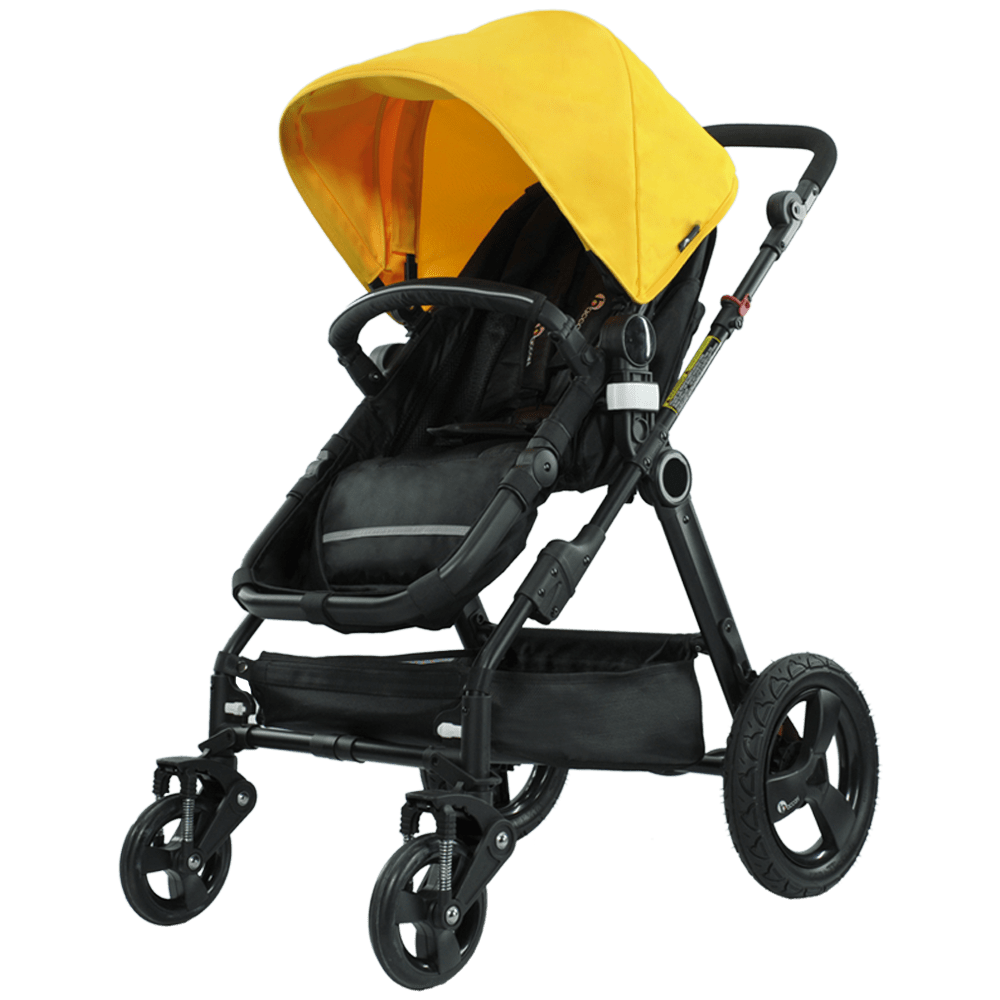
    Physical activity is an essential part of your child’s growth. As a parent, you should be mindful about dividing your baby’s time to receive a good amount of rest as well as a good amount of activity. Do not let your baby remain idle inside a pram for extended periods, as this may hinder their growth.

    So, there we have it! These are our expert tips on identifying and maintaining proper safety standards and keeping your baby secure during their stroll and pram times. Have another read if you are not sure about something. Make sure to religiously go through the New Zealand Standards for Prams and Strollers before making your purchase.

    You can check it out via: https://www.standards.govt.nz/shop/asnzs-20882013/

  • Keeping Your Baby’s Residence Clean: Top Tips on Pram Maintenance

    Keeping Your Baby’s Residence Clean: Top Tips on Pram Maintenance

    Our vehicle, we are very particular about it, aren’t we? Well, think of your pram or stroller as a vehicle for your baby, and its care should come as second nature to you. Letting your car catch rust or allowing it to lose its lustrous exterior is a huge ‘no-no’, and the same goes for its interior. No one wants to go for a ride in a smelly car. A pram is where your child sleeps, eats, plays, and explores the world. To keep things fun, enjoyable, and comfortable for your baby, you have to ensure that their ‘residence’ remains clean, tidy, and devoid of unpleasant odours. Yes, this may seem like more work, but, as we always say, your baby’s needs are non-negotiable. To keep your pram in tip-top condition, there are several things that you can do regularly. These actions will help you and your baby so let us walk you through a few helpful tips.

    Note: Regular maintenance would keep your pram in pristine condition while keeping its functionality intact. You don’t have to do an inch-by-inch clean-up every single time you take your pram out for maintenance. However, we recommend that you do a ‘deep clean’ at least twice a year.

    Step 1: Refer to Your User Manual

    Most prams and strollers are sold along with a user manual that provides a basic rundown of fundamental care. The user manual is usually equipped with a detailed breakdown of the parts and components of your pram. It also comes along with comprehensive instructions on removing the specific elements of your pram for cleaning and maintenance.

    Step 2: Start with Your Accessories

    Start with your fabric accessories. Generally, the fabric components of a pram or stroller can be machine washed without any hassle. Set your machine up to a ‘delicate’ or ‘wool’ setting. Don’t forget to ensure that the temperature does not exceed a temperature of 30°C.


    Use a mild detergent and fabric softener according to your preference. A good smelling pram is always a bonus. After washing, straighten the fabric out and leave it out to dry in the shade. Placing it under direct sunlight would result in the colour burning off in certain fabrics. Therefore, a shady surface is highly recommended.

    For your plastic accessories, use warm and soapy water. After cleaning them thoroughly, rinse the parts and let them dry under the sun.


    Step 3: Dust On – Dust Off

    Your stroller is like your baby’s residence. Therefore, the accumulation of dirt, crumbs, and dust is inevitable. Use a vacuum cleaner to give your pram a thorough cleansing. You can also use a brush for this purpose. Suppose your vacuum cleaner or cleansing brush cannot reach the tiny particles hidden beneath certain nooks and crannies, especially beneath the joints and moving parts. In that case, you can use a soft toothbrush to clean them up.

    It is advisable you pay special attention and care to clean out the following parts and accessories:

    • Belly bar sockets
    • The handlebar
    • Safety harness and buckle
    • Seats recline latch
    • Canopy connectors
    • Folding joints (collapse the frame when doing this)
    • Inside the wheel hubs (front & rear)
    • The area where the brake connects to the wheel
    • In and around all buttons

    Step 4: Wipe! – Time To Get the Liquids Involved 

    First, use a soft sponge or a cloth and soak it in warm water with a mild detergent. Use this to give your dusted pram a thorough cleansing. While doing so, you may encounter a couple of tricky spots that simply refuse to leave your pram alone. Let’s see what can be done about those:

    1. Mould 

      – The best natural substance to remove mould is clove oil. Add the clove oil (about a regular bottle cap) to a spray bottle, add 2 tablespoons of salt and fill it with warm water. Spray the solution directly onto the mould. Then give it a thorough scrubbing, which would loosen up the mould spores. Leave this for around 1 hour and use a cloth and a bucket to wet the surface again and wipe it off. This will ensure that you completely wipe off all traces of the fungus.


    Note: Clove oil can leave a residual brown streak on fabrics and may cause allergic reactions in some people. You may use a solution of white vinegar and water mixed at 3:2 respectively, as an alternative.

    1. Stubborn Stains – 

      For tough stains, use a solution of white vinegar and water mixed at a 1:1 ratio. You can also use vinegar with bicarb. As we did with the mould, use a spray bottle, directly spray it onto the stain, and leave it for a few minutes. Afterwards, use a cloth to wipe it down and rinse the spot well with clean water.

    Note: Using vinegar will cause some damage to the colour, depending on the fabric. Use it at your own discretion.

    Step 5: Cleaning the Wheels

    Before you start cleaning your wheels, you should remove them. Please do refer to the user manual for instructions on how to remove your wheels. Use the same cleaning solution of a mild detergent and warm water and spray it directly onto the wheels. Use a hard brush and give them a good scrub to remove all dirt and build-up. Make sure that the elusive dirt around the wheel hub receives your undivided attention as well.

    Step 7: Lubricate Joints & Moving Parts

    It is essential that you quickly inspect the moving parts in the pram and ensure that they are in perfect working condition. These parts are:

    • Locking Devices
    • Harness
    • Catches
    • Joints
    • Brakes
    • Fixtures

    Upon inspection, if you feel like any of the devices are difficult to operate, remain stiff/immovable or create a squeaking noise due to friction, it is due to a lack of lubrication.

    To lubricate these parts, use a sprayable silicone lubricant. Ensure that the lubricant is applied evenly through every single part, including areas that remain elusive or difficult to access. Excessive lubrication may increase the build-up of dirt. Therefore, you should only use the necessary amount.

    Step 8 – Final Touch-ups

    Once your pram is air-dried, you can do some paint touch-ups to improve its appearance. For example, in a pram with a black or darker coloured frame, scratch marks and other signs of damage are more visible to the naked eye. Therefore, you can use some paint and spray over the frame to keep the pram in pristine condition.

    Prevention Is Better Than the Cure

    1. Rust, Mould & Mildew

    Regularly tending to rust and mould build-up in your pram can be a gruelling task. To ensure that your hassle remains minimum, you should take some preventive measures.

    Top Tips on Pram Maintenance

    Suppose your pram is exposed to wet or damp conditions. In that case, you should leave it fully opened in a ventilated, warm environment to air dry and prevent the build-up of rust and mould. If your pram got really wet, you could use a soft lint-free cloth to wipe it up before leaving it to dry. With the fabrics, you can detach the soaked parts from the pram and put them in the dryer. If you do not take these preventive measures, rust, mould, and mildew build-up is inevitable.

    1. Structural Damage

    Refrain from leaving your pram inside your car on days where the weather sides with extreme heat. Similarly, do not leave it near any heat source or fire. When storing the stroller, do so in a safe, dry and well-ventilated place while ensuring that you do not place heavy items on top of it. To avoid the colour burning out and fading, be mindful of leaving the pram under direct sunlight for extended periods.

    1. Spare Parts

    When replacing dysfunctional or broken parts of your pram, make sure to purchase spare parts that comply with the latest safety standard – AS/NZS 2088:2013.

    Well, that’s about all the tips we can offer! Once you buy a pram, maintenance comes along with it. To ensure that your pram serves its entire period of durability, you have a role to play in it as well. It is your job being the parent to ensure that your child is comfortable and safe at all times. Follow our instructions to a ‘t’, and you will be fine! Whenever you need more help or guidance, do a little bit more research online, and you’ll be good to go!

    We hope you found this information useful. If you have any difficulty following the given instructions, then please get in touch with your manufacturer. They will be happy to help. Until next time then! Happy parenting!

  • How to Choose the Perfect Pram? Top Tips That Every Parent Should Know.

    How to Choose the Perfect Pram? Top Tips That Every Parent Should Know.

    While Stepping into the world of parenting is an exciting affair, learn how to choose the perfect pram is tough. Your life would completely turn around in the blink of an eye when your little one arrives.

    While engaging in your parental duties, a stroller serves as an essential item in your parenting kit. Grocery shopping, walks around the neighborhood, or your daily morning jog, would now be adjusted to suit your baby’s comfort and needs. Yes, this feels like a daunting task, but have no worries because the tips below will guide you in the process of picking out the perfect stroller to suit your needs.

    You can simply resort to carrying your bundle of joy in your hands, but there will be times where you need to keep your own hands free to go about with your tasks. To accommodate your needs as an individual and as a parent, there is no better solution than having a perfectly engineered stroller at your disposal.

    When selecting a pram for your child, you should consider your current lifestyle and requirements. These needs shall change over time. When your newborn grows through infanthood into becoming an energetic toddler, they may no longer need to sit still in a pram more suited to an infant’s needs. Therefore, it is recommended that you take your baby’s changing pattern into account when choosing a stroller that would suit your current lifestyle as a parent.

    how to choose a pram


    What is the difference between Prams and Strollers?

    The answer is simple, and knowing it is the first step in deciding your baby’s first set of wheels.

    Baby Stroller – Technically, a ‘stroller’ refers to a model which has an upright seat.

    Baby Pram – A baby pram is a model that contains a bassinet (a flat sleeping surface).

    However, one should note that in modern usage, the terms ‘stroller’ and ‘pram’ are used interchangeably and can refer to the same product.

    Baccani New Zealand produces models that allow both positions, as versatility is a feature that the company takes great pride in. Baccani products are the best in New Zealand. They serve the function of a pram and stroller with maximum cohesion and continuity.

    Choosing the Perfect Stroller

    Since a pram or a stroller is one of the most vital tools in your parenting arsenal, the importance of choosing the right tool for the job remains a non-negotiable task. Without the proper choice, you would stress out and create several inconvenient situations in your day-to-day life as a parent.

    Therefore, get ready to delve into an expert guide on the process of picking out the perfect stroller that would fit your specific needs and lifestyles.

    The best stroller will be one that:

    • Has a seat that facilitates your needs and fits your child comfortably and safely.
    • Is built with the right height and weight for you to maneuver it easily.
    • Contains all the proper safety features.

    Different Types of Strollers

    1. Jogger Stroller/Pram – Aimed for parents who frequently engage in jogging/exercise.
    2. Layback Stroller/Pram – Lightweight stroller where a baby can lie down or sit up.
    3. Convertible Stroller/Pram – Supports a wide range of seating positions. Adapts according to the parent’s needs.
    4. Car Seat Stroller/Pram – Used primarily as an infant’s car seat.
    5. Twin Stroller/Pram – For parents with twins and have more than one toddler.

    Twin Strollers

    There are three different types of this pram.

    1. Side by Side Twin Stroller/Pram – There are two seats next to each other
    2. Tandem Twin Stroller/Pram – This seats one baby in front of the other
    3. Single Seat Twin Stroller/Pram with Additional Seat – This comes with an extra detachable seat which can be used later on if needed.

    Essential Features to look for:

    Suitability for a Newborn

    • A pram should be suitable to tuck in your little one from birth until they weigh around 15kg as a toddler.
    • Look for strollers that come with a bassinet attachment which could be swapped out for a seat to accommodate your baby as they grow up.
    • Certain prams are also equipped with reclining seats that can lay flat to safely carry your baby, along with the capability of adjusting over time.

    (These strollers with the ability to lie flat are generally more suited and produced for babies over 6 months)

    Suitable Size

    • You should test out your pram by folding and unfolding it to check if you can carry it around comfortably in a folded state.
    • Be sure to purchase your stroller at a store that provides you with the ability to test out the products before finalizing your purchase.
    • Check and make sure it fits your vehicle and seats without removing the wheels of the stroller.

    Wheels 

    • For maneuverability, swiveling front wheels are ideal.
    • It is also useful to have front wheels that can be locked in to suit higher speeds or when maneuvering your stroller through rough terrain.
    • The larger airless wheels tend to provide better performance on curbs and stairs than inflatable tires.
    • The puncture-proof airless tires with all-wheel suspension shall ensure the smoothest ride imaginable.
    • Before purchasing your stroller, give a hard tug at the wheels and check if their condition meets your needs.


    Brakes

    • Never settle for a product that does not guarantee their brake safety.
    • You, as the customer, are entitled to get an idea of how well the brake locks work. You can check this on a stroller by applying the brakes while trying to push the handle.
    • Take note if the brakes are linked and can be toggled via your foot. If so, you do not need to bend down every time you want to turn the brake on.


    Straps & Harness 

    • A good tug will make sure they are secure. Check whether the straps installed on the stroller are easily adjustable.
    • Ideally, these straps should be padded to increase comfort and minimize the risk of injury.
    • Observe and ensure that the seat does not come away from the frame when tugged at.


    Travel Systems

    • The best strollers and prams in the market are compatible with car seat capsules.
    • If made properly, you can discreetly clip them into the stroller using the proper adaptors without disturbing your baby’s sleep when shifting between the car, the pram, and back again.
    • It is not advisable to leave a baby asleep for a very long time in a car seat. Therefore, please be mindful about the time your baby spends secured to the seat.


    Folding Mechanism

    • A stroller needs to have a simplified system for the user to fold and unfold it.
    • This folding and unlocking mechanism should be simple yet inaccessible to the baby.
    • Check how much time it takes to fold the pram up. Check if you can do it smoothly. Some prams are incredibly complex and challenging to fold up and reassemble.
    • The best strollers in New Zealand markets are specifically engineered to mitigate any safety issues that may arise when folding. Thereby removing the threat of the stroller collapsing on your baby or damaging your fingers.


    Other features to look for:

    • Canopy – A stroller must be equipped with a canopy that is ideally waterproof.
    • A Rain Cover – To protect your child from rainy weather
    • Storage – It helps carry things like nappies, baby food, clothes, blankets, and your bags as well. (Check the size and weight limit)
    • Adjustable Height Handles – They come in handy for shorter and taller parents alike.


    What is the safest stroller option to buy?

    In theory, a three-wheeled stroller and a four-wheeled stroller should not have any safety difference. However, a poll conducted by choice.com showed that parents prefer four-wheeled prams and strollers above three-wheelers. This was in terms of safety, as three-wheelers report problems such as tipping, toppling, or rolling away unexpectedly.

    It is now mandatory that a stroller must contain a wrist strap that ensures that the stroller would never get away from you. For example, all prams and strollers produced by Baccani New Zealand are four-wheelers. Their products ensure your baby’s safety while incorporating even the most minute safety measures into the stroller design.

    How do you choose the stroller that best suits your needs? 

    Your stroller choice shall depend on your lifestyle and different scenarios. Here are some valuable tips for you:


    1. For shopping, you would require an easily maneuverable stroller. The stroller should not be too bulky or too wide. Having a decent-sized basket is a plus!
    2.  Are you a frequent public transport user? Then your stroller/pram should be light and easily foldable.
    3. If you frequently engage in jogging and walking, larger and puncture-proof wheels are required.
    4. Similarly to traveling on rough terrain, parks, and uneven surfaces, your stroller/pram should contain wheels that are large and resilient.
    5. Suppose you have two kids and walk frequently. In that case, it is advisable getting a reliable twin stroller that would accommodate your needs over a single stroller.