fbpx

Blog

  • Handle With Care: Safety Tips To Handle Your Stroller

    Handle With Care: Safety Tips To Handle Your Stroller

    Imagine this; you are in the prime of your life; you are, as the saying goes, “young, wild and free.” You cruise through life without an ounce of care in the world, and bam! You have a baby on the way.

    DEFCON-1!

    Once your baby comes along for the ride, all notions of risk and tomfoolery get thrown out of the window. It’s time to get rid of your ‘no time for caution’ mentality and buckle up for a long ride of safety, caution, patience, and responsibility. Do not get anxious, though; it is not something you cannot handle with a little bit of information and a possible prep level.

    Your little one will soon become ready to step into the outside world and take a stroll along with their mommy or daddy. Ideally, you should have a completely functional and fully equipped stroller prepared to go when it comes to that point.

    (For the best prams and strollers in New Zealand, visit: https://www.baccaniprams.co.nz/)

    Modern strollers often come equipped with the best safety features. They are manufactured according to international safety standards and are compelled to follow many guidelines before being made available for purchase. It’s all good, yes. But regardless of the guarantees provided by the manufacturer, you, as a parent, have a part to play in this ordeal as well.

    Let’s look at a few tips on how you can handle your stroller in the safest way possible:

    1. Check for Standard Requirements by the Manufacturer 

    When you purchase your stroller, you are given assurance of the standard safety requirements from the manufacturer. These standard requirements include the locking mechanism in the wheels and the seats, a proper harness, belt and safety mechanism, and the required warning labels.


    Read our locked-and-loaded-the-ultimate-pram-stroller-safety-guide to learn more about standard stroller safety requirements.

    With that out of the way, here are some tips on what you can do from your end to ensure your baby’s safety:

    1. Keep Your Baby Close 

    It has been scientifically proven that your baby is more comfortable when you are within their range of vision. It provides them with a psychological boost and has a calming effect. This goes both ways as well. For you as a parent, it is always better to have your baby within your sight to remain as calm and as comfortable as possible. It reduces the level of anxiety on your part, and you can obviously concentrate better with the rest of your work, knowing that your baby is safe and sound.

    When handling your stroller, you must place one hand on it at all times. However, it is understandable that this is not always possible. But, whenever it becomes difficult, we recommend that you exercise enough caution to place yourself at a range where you can grab the stroller or your baby in case the need arises. It can be an emergency or just the simple act of consoling your baby when they burst out in tears. Regardless of the situation, however, keep your baby close.



    1. Exercise Caution With Toys 

    Giving your baby a small toy to keep them entertained is a great way to stimulate them and minimize the fuss. You may either use a small, vibrant toy or a noise-making toy to achieve this purpose.

    However, you should exercise caution when handling toys because certain toys can cause a choking hazard depending on the baby’s age. Just keep on the safe side; avoid giving them any toys with removable parts or small enough to swallow.


    1. Double Check the Harness 

    To ensure that your baby is safely tucked into the stroller, you should double-check that your baby’s safety harness is firmly fastened. Howsoever, if you are busy and are in a hurry, a pro tip we can give you is to listen to the click of the harness. If it clicks without an issue, you can rest assured that your baby is safely strapped in.


    1. Park Your Stroller Safely

    Be cautious where you park and leave your stroller. Do not park it in any place that may cause potential harm to your baby.

    Always ensure that it is parked on a flat surface and that the stroller wheels are correctly locked. However, even though the stroller wheels might be locked, we cannot rule out the chances of the stroller tipping over or sliding if it is left on sloped terrain. Avoid leaving your stroller on such a landscape at all costs!

    Apart from this, always keep your baby attended when you are not on the move.

     

    1. Do Not Leave the Stroller Under the Sun 

    Don’t do it. Just don’t do it. As it is with rainy and windy conditions, prolonged periods under the sun can cause harm to your baby. We understand that you can’t keep moving all the time and that you need to catch a breather. However, find some shade to place your baby, even if the canopy is pulled out.

    Especially during the warmer months, it is quite natural for you to head towards a park or a pool. When doing so, always use the canopy and keep your baby covered from the sun’s rays. And as we said earlier, avoid prolonged periods under the sun as it can heat the metal components of your stroller very quickly and hurt your baby’s sensitive skin.

    1. Do Not Leave Your Baby Overnight 

    Do not let your little baby sleep in the stroller overnight. They might be comfortable in it, but it is unpredictable, and the chances of your baby suffocating in the stroller would increase if left unattended.

    While strollers can be extremely comfortable for babies and can make for an excellent short-term bed for supervised naps, they are absolutely not meant for a whole night’s sleep. They are probably not as comfortable as an actual crib/cot or toddler bed, and there is also the risk of your baby falling out or the stroller tipping over from the baby shifting too much.

    Always put the baby in a proper bed for a full night’s sleep.

    There should be a warning sign on this fact on the label of your stroller.

     

    1. Do Not Fold Your Stroller Near Your Baby

    Your baby is curious, and it’s beautiful. However, their curiosity does come with some cons if left unattended. When your little one becomes curious and fiddle around the stroller, it may damage their fingers. Make sure that the stroller is folded securely and is kept far away from your baby. The more unreachable it is, the better.

    1. Place Your Bags Accordingly 

    You have to make sure that you keep all the bags in the compartment designed explicitly for that purpose below the seat bottom. It is convenient to hang your purse or small bag around the handles of your stroller. However, do not do this as it increases tipping risk and creates an inconvenience in maneuverability. Keep them in the storage space provided below the stroller, and you can mitigate any risk associated with it.

    1. Maintain Your Stroller Regularly 

    Wear and tear are as dangerous as they come. You always have to ensure that your stroller is in tip-top condition to guarantee your baby’s safety. Read our article on pram and stroller maintenance here.

    Pro Tip: When the grip of your handle starts to wear off, the best thing that you can do at home is to use tennis racket grip tape to wrap around your handles when the material begins wearing off. The tape is made for people to have a good, comfortable grip, and it comes in a variety of colours.

    1. Pay Attention To Recalls

    Return the stroller warranty card so that you will be duly notified in case of a recall. If you’re considering buying a used stroller, check that the stroller hasn’t been recalled.

    In conclusion, the safety of your baby lies in the hand of two parties: yourself and the manufacturer. Purchasing the best stroller possible is vital and playing your part in ensuring your baby’s safety follows in a parallel motion right next to it.

     

    You can visit our website to purchase the highest quality strollers and prams in New Zealand. If you’re a reader from overseas, follow our blog and immerse yourself in previous articles we have published to learn all about making the proper purchase for your growing family.

    With that note, let us bid your adieu. Do go through these instructions again, and do not shy away from doing a bit of additional research on your own. It’s the 21st century, and Google is your friend. To you and your bub, hope you are well. Good luck and stay safe!


     

  • From ‘Coos’ to ‘Mommy I’m Cold’: Tips to Improve Your Baby’s Speech

    From ‘Coos’ to ‘Mommy I’m Cold’: Tips to Improve Your Baby’s Speech

    Ahhh, the magical period where your baby’s ‘coos’ and ‘goo-gahs’ turn into words that make sense. As your baby’s vocabulary takes form, you may have spent many a sleepless night trying to be the first person to hear their precious first words. Is it ‘mama’? or is it ‘dada’? Parenting is not a competition, but hey! What’s life without a few bragging rights?

    Before your baby begins to talk, they start absorbing vocabulary words and conversation skills. This happens way before they start uttering their first words. They are highly observant, mind you. So it is pretty important to create a conducive environment for your toddler to grasp things fast and to equip them with the verbal skills they require in conversation as early as possible.

    But how can we do that, you ask?

    Well, first, let us give you some expert tips on the matter. Afterward, the ball will be in your ballpark, do with it as you will.

    Step 1: Understanding Child Language Acquisition

    Being a widely accepted theory in the field of linguistics, Child Language Acquisition examines the inherent ability that a child possesses in acquiring a specific language.

    The theory has proven that all healthy children acquire language quickly and easily without a load of effort or the use of formal teaching methods. It happens automatically and does not depend on whether their parents make an active effort to teach them the language or not. They are born equipped with this evolutionary ability to acquire language.

    The first 36 months of your child’s life is generally considered to be the crucial period of language acquisition. You may wonder how these 36 months could be broken down. Simple, a list! We love lists here at Baccani.

    So here are the six stages into which your baby’s language learning adventures could be broken down:

    • Pre-talking stage / Cooing (0-6 months)
    • Babbling stage (6-8 months)
    • Holophrastic stage (9-18 months)
    • The two-word stage (18-24 months)
    • Telegraphic stage (24-30 months)
    • Later multiword stage (30+months)

    That’s child language acquisition, in a nutshell.

    Wait, so does this mean that a parent should sit around and do nothing while their child goes about their business mastering a language?

    Absolutely not!


    Step 2: Creating A Conducive Environment

    Although the initial stages of your child’s language acquisition do not require formal teaching by their parents or caretakers, you do have an important role to play in this regard. You should know that a child who is never spoken to would never acquire language. You should engage and talk with your baby directly. In the initial stages, if the baby is not paid enough direct attention in this regard, they will fail to develop their conversational abilities.

    For example:

    It has been proven that children under the age of 2, who are regularly exposed to television and radio but are not directly involved in communicating with the adults in their vicinity, fail to learn how to speak. As they are genetically programmed to acquire language through direct language communication with adults.

    Children are programmed to learn language through interaction. They interact not only with their parents but other adults and also with other children. All healthy children, growing up in a typical household and surrounded by frequent conversation, will acquire the language that is constantly being used around them.

    Miraculously, children are also equipped to acquire two or more languages simultaneously as long as they have regular interactions with speakers of those languages. This is extremely difficult for an adult to do, but hey! That’s why we say that children are indeed a miracle.


    Step 3: Teaching Your Baby How To Converse

    Before they can start speaking fluently, your baby should learn how conversation works. Here are some tips that you can try with your little ones to improve their grasp of conversation.


    • Pause – Be mindful of pausing when you speak to your baby. Leave little gaps in the middle of your sentences when you want them to respond or when they attempt to talk back to you.
    • Copy – Once your little one starts making sounds, encourage them to keep doing that by repeating their sound and making similar sounds. This is a suitable method of providing positive reinforcement for your baby early on and helps them understand the basic concepts of conversation.
    • Tonality – Remember that your tone is important. You should be mindful to adjust your vocal tone depending on the nature of the conversation. Speak with emphasis on important words, and adjust your volume depending on the topic.

    (Speak louder on an exciting topic, use a soft tone when describing something scary and so on)


    Step 4: Building Your Child’s Vocabulary

    Until your baby reaches a certain age, their vocabulary will be limited to a small number of words. Their vocabulary will expand through the years, and you have to be patient with them. Well, to be honest, you don’t need to practice patience because your child learning how to talk would be one of the cutest and most exciting things in the world.

    However, you have to remember that each child is different, and their vocabulary develops at a different pace. Just because the neighbourhood kid started talking earlier, do not worry. Allow your baby to take it at their own pace and comfort. Also, what you can do is support your baby to develop an expansive vocabulary that covers a wide range of expression and conversation.

    Here are a few things that you as a parent can do:

    • Read With Your Baby – One of the best methods to develop vocabulary is reading together with your child. Picture books are a great way to start. The concept of a picture book is based on labelling. Labelling each picture to its meaning will result in vocabulary growth. It is easier for a toddler to recognize familiar things like body parts, nature words, and animals. Reading together would also contribute to the development of your baby’s curiosity and inquisitiveness.


    • Do Not Hesitate To Use Big Words – Respect your baby’s intelligence. Plain and simple. Some parents share the attitude that they should only use small words that their baby can understand. And our thoughts on that? No, just no. Don’t do it. Remember that every word is a new word to them. ‘Dumbing down’ your vocabulary would only hinder their growth. Instead, encourage your little one to ask for the meaning of words that they do not understand. When they are a bit older, you can do a fun exercise where you ask your child to use the new word they learned later in a sentence.


    • Play Cognitive Games – Playing games like treasure hunts, Name the Thing, Simon Says aid in language development, social and emotional development, and cognitive development. They will specifically learn how to follow instructions and be familiar with preposition words.


    • Play Pretend With Toys – Setting up imaginary tea parties with your toddler’s toys is a great way to get them started on having conversations. Encourage them to ask questions from their toys, and you can answer on behalf of them. Make up an effective back-and-forth exchange to get the maximum benefit from this activity.


    • Sing Songs & Nursery Rhymes – It is scientifically proven that rhythm aids in memory. Allowing your toddler to learn words to a rhythm will help them remember new words and expand their vocabulary. Take the time to sing songs together with your child, and as a fun side-game, make up catchy songs about whatever you are doing at the moment.


    • Build On Your Child’s Utterances – Whenever your baby utters a word, a small phrase, or maybe even an incoherent sentence, encourage them by adding on to what they already said. If your toddler says something like: ‘That’s a dog,’ add on something like, ‘Yes kiddo, that’s a fluffy, playful dog.’


    • Explore, Explore, Explore – We can’t stress this enough. Your baby is the ultimate bundle of curiosity. Do whatever it takes to satisfy their natural curiosity and inquisitiveness. Take road trips, vacations, walks in the neighbourhood, or anything else that would get your toddler out in the world and expose them to language as much as possible. Always try to maintain a conversation with them while you are out. Ask them about what they can see and how they feel in a specific moment.


    • Positive Reinforcement Is Key – Do not be overly critical of your baby and avoid correcting their mistakes as much as possible. It’s natural for them to make plenty of mistakes during the first couple of years, especially when it comes to grammar. The plurals, passive voice use, and the proper use of the past tense will come later; for now, just encourage them for trying and be patient.


    A Closing Note: As soon as your toddler starts responding to you regularly, try to keep it up for around 10 minutes of back and forth between you. As we mentioned earlier, each baby reaches a conversational level at their own pace. However, suppose your baby hasn’t started babbling or speaking at least a few words by the time they are 18 months old. In that case, you should consult your paediatrician about it. It is natural for some kids to start talking pretty late, but speech therapy and doctor’s advice would help speed up the process.

  • Locked and Loaded: The Ultimate Pram & Stroller Safety Guide

    Locked and Loaded: The Ultimate Pram & Stroller Safety Guide

    Like any other product in the consumer market, Strollers and Prams have developed and expanded through the years. These products have undergone profound structural, design, and engineering changes that have guaranteed a better consumer experience along with various technological advancements. New features installed in modern-day strollers cater to making your baby’s ride safer and more comfortable. In contrast, other features are specifically designed to meet the needs and improve the comfort of parents.

    In the past, we have taken you through a comprehensive guide on how to choose the best prams and strollers for your little ones. Today, let us walk you through the specific safety features and security essentials that you should add to your checklist when purchasing the best stroller/pram imaginable.

    1. Safety Standard Label 

    If you’re buying a new pram or stroller, the first thing is to check if it meets the mandatory New Zealand Standard AS/NZS 2088. Look for the New Zealand Standards label, which should be mandatorily placed on the product. If you are unsure, please ask the retailer for the necessary proof of safety.

    1. Restraint System 

    When purchasing a stroller, make sure to choose one with a sturdy safety belt and a crotch strap. These two accessories keep your baby or a toddler from slipping as well as sliding out of the stroller and risking severe injury. Mostly, the safety belt and crotch strap are made out of a thick nylon webbing. According to Australia/New Zealand safety standards and ASTM safety standards, a crotch strap is mandatory when a waist strap is used.

    When checking up the buckles installed on the harness, make sure that you purchase a stroller with buckles that are convenient for you to operate but would be difficult for your baby’s tiny hands to unfasten. It is better if you can shop with your baby so that you can place them in the pram/stroller. This allows you to check if the seat belt is strong, durable, and fits around your child so that it doesn’t cause them any discomfort.


    In some strollers, the safety restraints are limited to waist and crotch straps. We do not recommend that you purchase a model of that caliber. However, you can be rest assured that most modern-day strollers in the market are equipped with an adjustable five-point harness that meets the required safety standards. A five-point harness, much like the safety harnesses found in car seats, have two straps going over the baby’s shoulders, two for the thighs, along with a crotch strap. This mechanism will quite effectively keep your baby from slipping, sliding out, or falling off. It mitigates their ability to climb out of the stroller whenever you need to divert your attention elsewhere. Apart from this, check if the straps are height-adjustable, ensuring a proper fit and if they too are anchored to the stroller securely.

    1. Brake System 

    When testing your stroller out, pay a lot of attention to its parking brake and functionality. Its mechanism should be convenient for you to operate, and the brake should essentially lock two wheels. Having parking brakes operating through two wheels provides an added margin of security to your stroller.

    The mechanism of a two-wheel parking brake may vary from product to product. Some brakes are activated with a single stroke by a bar that is installed in the rear of the stroller frame. In contrast, other brake systems require two actions, which need two foot-operated tabs that are installed above each rear wheel. Regardless of the applying mechanism, when the brakes are activated, the plastic cogs engage with the rear wheel’s sprockets and effectively bring the stroller to a halt.

    In addition to the parking brakes, most strollers are equipped with hand-operated brakes similar to those installed on bicycles. If you use a jogging stroller, this mechanism comes in handy for you to quickly slow down when you’re cruising at a faster clip.

    Remember! It’s all about your convenience. If the brake system hurts your foot when engaging and disengaging the mechanism, just avoid that product. Ideally, you should test it out using light shoes or bare feet. The same theory applies to the hand brakes. If it hurts, move on to the next. Simple as that!

    1. Wheels 

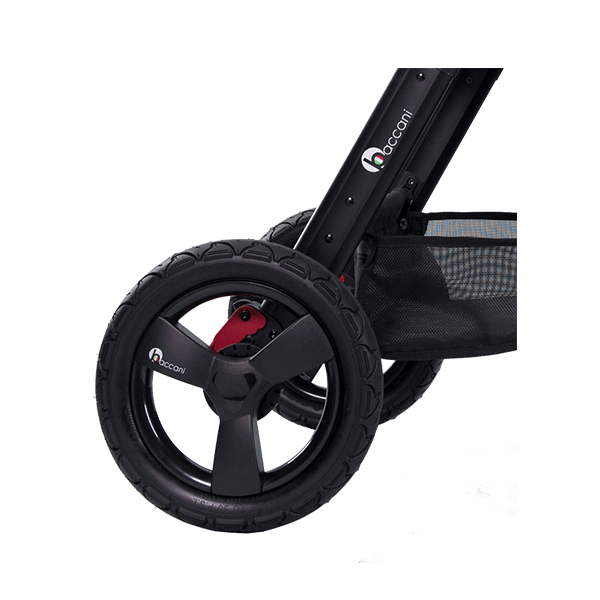
    In current times, it’s almost hard to distinguish SUV wheels from those of their stroller counterparts. (A slight exaggeration, although you know what we mean) Equipped with larger and more rugged wheels, most modern-day strollers come cruising with an almost off-road appearance. However, this does provide a particular functional advantage; the larger the wheels, the easier it is to maneuver your stroller over rough surfaces, curbs, and other unfriendly terrains.

    On the flip side of the coin, when you have larger wheels, this means more trunk space than you can afford when it comes to transporting your stroller in your vehicle. This may create an inconvenience based on your trunk capacity. Therefore, choose a stroller with wheels that suit your convenience in addition to its safety and functionality.

    The Ultimate Pram & Stroller Safety Guide

    Your stroller’s front wheels may or may not swivel based on the type of stroller you buy. Most modern strollers come equipped with two wheels that swivel, making steering a lot more convenient. There are two positions that such front wheel’s feature:

    1. Full Swivel – For smooth surfaces
    2. Forward Facing Lock – For rough terrain

    The mark of a well-engineered stroller has wheels that are aligned uniformly with the ground even when a baby is inside.

    Certain three-wheeled strollers, however, may have a front wheel that doesn’t swivel. We do not recommend such a purchase unless you’re ready for a whole lot of elbow grease.

    1. Leg Holes 

    The leg holes are an essential safety mechanism that should function properly in your stroller. Since your newborn or toddler cannot fully control their movements, the stroller should have leg holes that close, which would not allow an infant to slip through it. Most manufacturers install a mesh, fabric shields, or a hinged and molded footrest that raises and clamp over the leg holes, increasing its security. According to industry standards, a stroller containing leg holes that cannot be closed should not recline fully. This is meant to prevent its use with your newborn.

    1. Canopy 

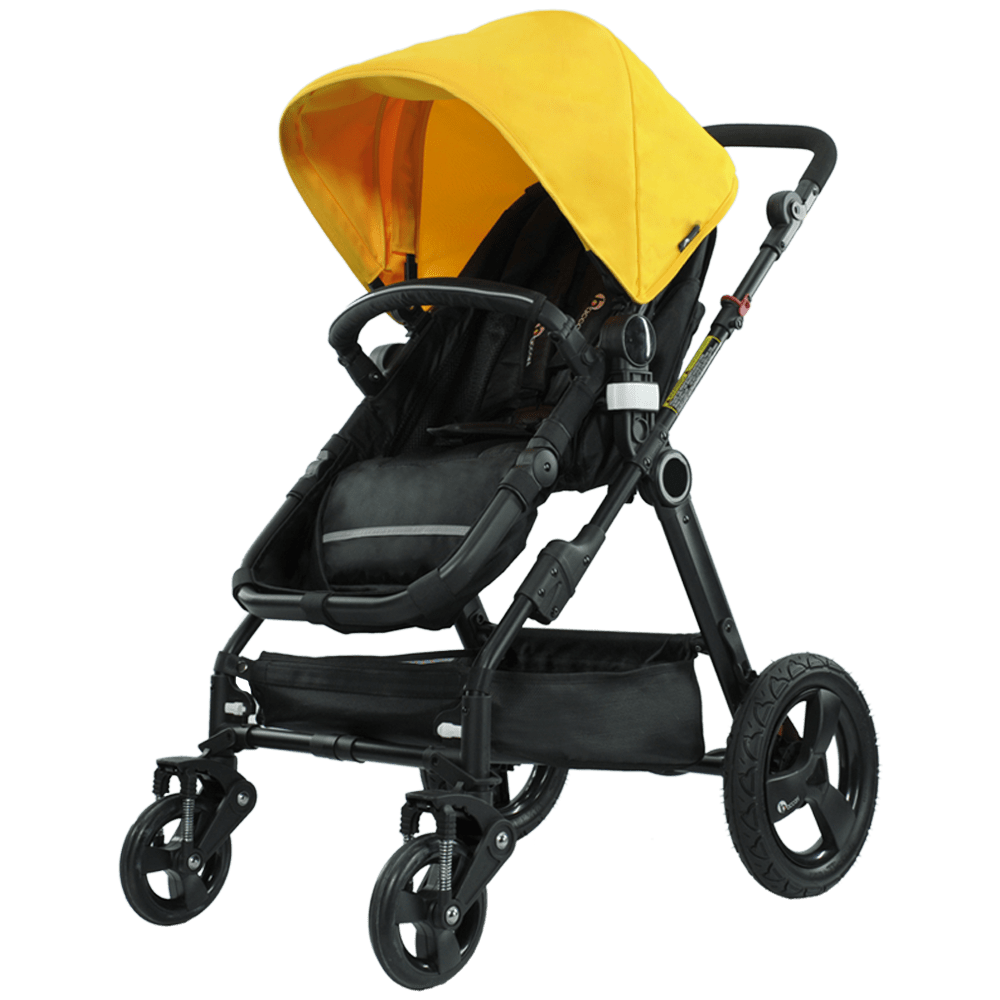
    As a multipurpose weather protection unit, a canopy is a mandatory accessory that should come with your stroller. Regardless of glaring sunlight, heavy winds, or rainfall, a canopy functions as a protective unit for your baby, who is safely tucked in.

    Canopies are available in a wide range. From a simple fabric strung between two wires to semi-automated pull-down versions that can shield the entire front of the stroller, canopies are available to meet your needs as you wish.

    There are reversible canopies that have the ability to protect your baby from the sun and wind regardless of the direction. Some canopies come with a peek-a-boo feature, a transparent plastic shield on top so that you can keep an eye out on your baby during your stroll time.

    Some Important Safety Tips For You:

    If your child falls asleep inside the pram unless you’re in a position to observe them at all times, it’s best that you move them to a cot. It is dangerous to leave your baby unattended in a pram or stroller when they are asleep. Most babies tend to wriggle around, and this may increase the risk of the pram tripping over. A severe mishap could even result in suffocation or strangulation.


    Annually, several children are hospitalized due to pram or stroller-related injuries. The primary cause of this is the risk of your pram tipping over, due to your baby wriggling while asleep or when they are unattended. Therefore, make sure that you always act with caution and vigilance. As an added safety measure, do not add a large amount of weight to your stroller in the form of bags and shopping items.


    Physical activity is an essential part of your child’s growth. As a parent, you should be mindful about dividing your baby’s time to receive a good amount of rest as well as a good amount of activity. Do not let your baby remain idle inside a pram for extended periods, as this may hinder their growth.

    So, there we have it! These are our expert tips on identifying and maintaining proper safety standards and keeping your baby secure during their stroll and pram times. Have another read if you are not sure about something. Make sure to religiously go through the New Zealand Standards for Prams and Strollers before making your purchase.

    You can check it out via: https://www.standards.govt.nz/shop/asnzs-20882013/

  • Keeping Your Baby’s Residence Clean: Top Tips on Pram Maintenance

    Keeping Your Baby’s Residence Clean: Top Tips on Pram Maintenance

    Our vehicle, we are very particular about it, aren’t we? Well, think of your pram or stroller as a vehicle for your baby, and its care should come as second nature to you. Letting your car catch rust or allowing it to lose its lustrous exterior is a huge ‘no-no’, and the same goes for its interior. No one wants to go for a ride in a smelly car. A pram is where your child sleeps, eats, plays, and explores the world. To keep things fun, enjoyable, and comfortable for your baby, you have to ensure that their ‘residence’ remains clean, tidy, and devoid of unpleasant odours. Yes, this may seem like more work, but, as we always say, your baby’s needs are non-negotiable. To keep your pram in tip-top condition, there are several things that you can do regularly. These actions will help you and your baby so let us walk you through a few helpful tips.

    Note: Regular maintenance would keep your pram in pristine condition while keeping its functionality intact. You don’t have to do an inch-by-inch clean-up every single time you take your pram out for maintenance. However, we recommend that you do a ‘deep clean’ at least twice a year.

    Step 1: Refer to Your User Manual

    Most prams and strollers are sold along with a user manual that provides a basic rundown of fundamental care. The user manual is usually equipped with a detailed breakdown of the parts and components of your pram. It also comes along with comprehensive instructions on removing the specific elements of your pram for cleaning and maintenance.

    Step 2: Start with Your Accessories

    Start with your fabric accessories. Generally, the fabric components of a pram or stroller can be machine washed without any hassle. Set your machine up to a ‘delicate’ or ‘wool’ setting. Don’t forget to ensure that the temperature does not exceed a temperature of 30°C.


    Use a mild detergent and fabric softener according to your preference. A good smelling pram is always a bonus. After washing, straighten the fabric out and leave it out to dry in the shade. Placing it under direct sunlight would result in the colour burning off in certain fabrics. Therefore, a shady surface is highly recommended.

    For your plastic accessories, use warm and soapy water. After cleaning them thoroughly, rinse the parts and let them dry under the sun.


    Step 3: Dust On – Dust Off

    Your stroller is like your baby’s residence. Therefore, the accumulation of dirt, crumbs, and dust is inevitable. Use a vacuum cleaner to give your pram a thorough cleansing. You can also use a brush for this purpose. Suppose your vacuum cleaner or cleansing brush cannot reach the tiny particles hidden beneath certain nooks and crannies, especially beneath the joints and moving parts. In that case, you can use a soft toothbrush to clean them up.

    It is advisable you pay special attention and care to clean out the following parts and accessories:

    • Belly bar sockets
    • The handlebar
    • Safety harness and buckle
    • Seats recline latch
    • Canopy connectors
    • Folding joints (collapse the frame when doing this)
    • Inside the wheel hubs (front & rear)
    • The area where the brake connects to the wheel
    • In and around all buttons

    Step 4: Wipe! – Time To Get the Liquids Involved 

    First, use a soft sponge or a cloth and soak it in warm water with a mild detergent. Use this to give your dusted pram a thorough cleansing. While doing so, you may encounter a couple of tricky spots that simply refuse to leave your pram alone. Let’s see what can be done about those:

    1. Mould 

      – The best natural substance to remove mould is clove oil. Add the clove oil (about a regular bottle cap) to a spray bottle, add 2 tablespoons of salt and fill it with warm water. Spray the solution directly onto the mould. Then give it a thorough scrubbing, which would loosen up the mould spores. Leave this for around 1 hour and use a cloth and a bucket to wet the surface again and wipe it off. This will ensure that you completely wipe off all traces of the fungus.


    Note: Clove oil can leave a residual brown streak on fabrics and may cause allergic reactions in some people. You may use a solution of white vinegar and water mixed at 3:2 respectively, as an alternative.

    1. Stubborn Stains – 

      For tough stains, use a solution of white vinegar and water mixed at a 1:1 ratio. You can also use vinegar with bicarb. As we did with the mould, use a spray bottle, directly spray it onto the stain, and leave it for a few minutes. Afterwards, use a cloth to wipe it down and rinse the spot well with clean water.

    Note: Using vinegar will cause some damage to the colour, depending on the fabric. Use it at your own discretion.

    Step 5: Cleaning the Wheels

    Before you start cleaning your wheels, you should remove them. Please do refer to the user manual for instructions on how to remove your wheels. Use the same cleaning solution of a mild detergent and warm water and spray it directly onto the wheels. Use a hard brush and give them a good scrub to remove all dirt and build-up. Make sure that the elusive dirt around the wheel hub receives your undivided attention as well.

    Step 7: Lubricate Joints & Moving Parts

    It is essential that you quickly inspect the moving parts in the pram and ensure that they are in perfect working condition. These parts are:

    • Locking Devices
    • Harness
    • Catches
    • Joints
    • Brakes
    • Fixtures

    Upon inspection, if you feel like any of the devices are difficult to operate, remain stiff/immovable or create a squeaking noise due to friction, it is due to a lack of lubrication.

    To lubricate these parts, use a sprayable silicone lubricant. Ensure that the lubricant is applied evenly through every single part, including areas that remain elusive or difficult to access. Excessive lubrication may increase the build-up of dirt. Therefore, you should only use the necessary amount.

    Step 8 – Final Touch-ups

    Once your pram is air-dried, you can do some paint touch-ups to improve its appearance. For example, in a pram with a black or darker coloured frame, scratch marks and other signs of damage are more visible to the naked eye. Therefore, you can use some paint and spray over the frame to keep the pram in pristine condition.

    Prevention Is Better Than the Cure

    1. Rust, Mould & Mildew

    Regularly tending to rust and mould build-up in your pram can be a gruelling task. To ensure that your hassle remains minimum, you should take some preventive measures.

    Top Tips on Pram Maintenance

    Suppose your pram is exposed to wet or damp conditions. In that case, you should leave it fully opened in a ventilated, warm environment to air dry and prevent the build-up of rust and mould. If your pram got really wet, you could use a soft lint-free cloth to wipe it up before leaving it to dry. With the fabrics, you can detach the soaked parts from the pram and put them in the dryer. If you do not take these preventive measures, rust, mould, and mildew build-up is inevitable.

    1. Structural Damage

    Refrain from leaving your pram inside your car on days where the weather sides with extreme heat. Similarly, do not leave it near any heat source or fire. When storing the stroller, do so in a safe, dry and well-ventilated place while ensuring that you do not place heavy items on top of it. To avoid the colour burning out and fading, be mindful of leaving the pram under direct sunlight for extended periods.

    1. Spare Parts

    When replacing dysfunctional or broken parts of your pram, make sure to purchase spare parts that comply with the latest safety standard – AS/NZS 2088:2013.

    Well, that’s about all the tips we can offer! Once you buy a pram, maintenance comes along with it. To ensure that your pram serves its entire period of durability, you have a role to play in it as well. It is your job being the parent to ensure that your child is comfortable and safe at all times. Follow our instructions to a ‘t’, and you will be fine! Whenever you need more help or guidance, do a little bit more research online, and you’ll be good to go!

    We hope you found this information useful. If you have any difficulty following the given instructions, then please get in touch with your manufacturer. They will be happy to help. Until next time then! Happy parenting!

  • Rock-a-bye Baby: Understanding Your Child’s Sleeping Patterns 

    Rock-a-bye Baby: Understanding Your Child’s Sleeping Patterns 

    Ahhh, a sleeping baby! In terms of pure cuteness, they are in a league of their own. The average newborn sleeps through much of the day and night, and that’s just how it is. They do wake up, though, with a loud wail and mind-blowing tenacity, announcing to the whole neighborhood that they, the Royal Highnesses, are now hungry and ready to be fed. But hey, every baby is Royalty. They are their parent’s treasure and should be treated as such.

    Figuring out your baby’s sleeping patterns can be a bit of a mystery at first, especially if this is your first rodeo with a baby. For the first couple of weeks, however, there is no set schedule. This makes it hard for a parent to figure out how often and how long their newborn would sleep.

    What is my baby’s sleeping schedule, you ask?

    Well, until your baby grows a couple of inches, neither you nor we would know the answer to this question. Like us, the baby remains confused. Many newborns have their days and nights in a twist. One day they are sleeping soundly at night, and the next night they have you questioning the very reason of your existence. But this confusion is part of the process, and you have to simply try and understand your baby while moving through the motions. This process should be followed until your baby is old enough to operate at a predictable schedule.

    Is there any discernible newborn sleeping pattern at all?

    Well, although there is no definite pattern when it comes to a baby’s sleeping habits, there are certain traits that you as a parent can work around when dealing with it.


    Here are a few common sleeping traits among newborns:

    1. A newborn usually sleeps for a total of around 8-9 hours during the daytime and about 8 hours during the night within a 24-hour period.
    2. Since they have a small stomach, they will wake up once every few hours to be fed.
    3. Baby’s start to sleep through the night in 6-8 hours intervals once they reach around 3 months since birth.
    4. However, in some newborns, this may take up to nearly 12 months, so do not worry if it doesn’t happen soon.

    Refer to these 4 facts, and they are sure to help you out!

    Having said that, after they fall into a predictable sleeping pattern, you will notice that your baby will wake up once every 3 hours for their feeding time. Take this as a cue to have their meals ready on time.

    The frequency of hungry-time nagging will often depend on the baby and what they are being fed at their age. Before you make any decisions on a fixed feeding schedule, don’t hesitate to get in touch with a licensed healthcare provider to figure out if you need to wake your baby up, set certain feeding intervals, and what to feed your baby at a certain age.

    You must understand that you and the baby are in this together. We can often get lost in comparisons and question why your baby is not behaving a certain way. However, you must realize that each baby is unique, and understanding your own, is the key to mitigate any issues that may arise with their patterns.

    However, you should take particular care to watch for changes that may occur in your baby’s sleeping patterns. A slight deviation is acceptable, and there is nothing to worry about. But, if your baby has constantly been sleeping or keeps waking up suddenly and more often, there might be a problem. Of course, there is also the possibility that your baby is simply going through a growth spurt and needs more nom-nom. You can just refer to your doctor and feed them more if that is the case.

    Pro Tip: Manage Overstimulation

    Some sleep disturbances occur exclusively when your baby goes through changes in development or when the baby is overstimulated.

    What exactly is overstimulation? 

    Overstimulation happens when children are swamped by more experiences, sensations, noise, and activity than they can cope with.

    For example, a newborn baby might get very unsettled after a party where they’ve interacted and have been cuddled by a lot of grown-ups.

    When your baby grows up, especially during the first five years of their life, they need a stimulating environment that provides plenty of different activities that pave the way to play, learn and practice what they learn. But they also need some tranquility in a safe and familiar environment to recharge, feel secure, and calm down.

    What is the best home remedy for this?

    If you see your baby is overwhelmed, take them somewhere quiet, peaceful, and, if possible, with low light. Your baby will start to calm down in such an environment. The best option you can use is the baby’s cot, and if you are out with your baby, you can use your pram. First, tuck them in tight and cover them with a blanket or a light wrap. Ensure that they receive a continuous airflow, and one will notice that the baby will start to calm down after a while. This is the best remedy we can suggest for overstimulation.

    Let’s Talk Alert Phases!

    The level of alertness in a baby may vary during the time that they are awake. Let us now walk you through all the different alert phases of a newborn.

    1. Quiet & Active Alert Phase

    As soon as a newborn wakes up at the end of the sleep cycle, they go through a calm alert phase more often than not. During this time, the baby remains very still, but they are awake, stimulated, and taking in and adapting to their environment. So, what does a baby do when they are in this phase?


    They will mostly stare into a blank space or at particular objects and respond to external stimuli such as motion and sound. The quiet alert phase would then gradually progress into the active alert phase, where the baby will still react to external sounds, activity, and sights. Still, in contrast with the quiet alert phase, their responses will be more active, and they will move around more.

    1. Crying Phase

    What follows the two alert phases is the crying phase. Babies are easily overstimulated during the crying face, so they will start moving around quite erratically. This is also accompanied by crying and buckle up because it is going to be loud!

    It is best to feed the baby before they progress into the crying phase. Once they enter the crying phase, they may be so upset that they will vehemently refuse the breast or the bottle. In newborns, crying is usually a sign of hunger. Therefore, reserve your feeding time to the quiet alert phase, right before overstimulation occurs.

    Following the steps under ‘best home remedy for overstimulation’ to manage this phase as we explained above. It is recommended that you find a way of calming the baby and switching the environment or making the existing environment calmer by removing all overstimulating factors is the ideal solution for this. Hold your baby close to you or tuck them in their pram/cot to keep them calm. Apart from this, the best traditional remedy to calm down an overstimulated, crying baby is swaddling.

    What is swaddling?

    Swaddling is a traditional practice of wrapping your baby up as gently as possible in a blanket that is light and breathable. This will help them calm down and fall asleep. A swaddled baby’s head should never be wrapped and instead should be kept exposed to the air. The idea behind swaddling a baby is to help your little one feel snug and secure, recreating the conditions in your womb.

    Take caution as you swaddle!

    1. Since swaddling keeps their arms and legs from flailing, it is recommended to practice this only on newborns.
    2. When your baby is 2 months or older, do not swaddle them as they can roll over onto their stomach. Doing so would increase the risk of SIDS.
    3. Give your baby enough room to move their hips and legs. Tightening the blanket too much will affect their skeletal development. It would also increase the risk of hip dysplasia and dislocation.
    4. Be mindful of the weather conditions; do not use a thick blanket when it’s hot and vice versa. Keeping your baby at the right temperature is vital.

    Helping your baby sleep

    You can put your baby to sleep when they start showing signs of sleep readiness. 

    1. Yawning
    2. Rubbing Eyes
    3. Fussing
    4. Looking Away

    Not all babies are capable of putting themselves to sleep. While some parents rock their babies to sleep or make them fall asleep while breastfeeding, it is good not to let these become a pattern because the baby will become overly reliant on such conditions. However, this is totally fine during the newborn phase.


    After the newborn phase, the expert recommendation is to allow your baby to feel sleepy in your arms and then placing them on their bed while they are still awake. Doing so would allow the baby to learn how to go to sleep on their own. If you want some extra support, playing some soft music would always be effective!


  • Going Organic: The Best Clothing Options for Your Baby

    Going Organic: The Best Clothing Options for Your Baby

    When taking care of your newborn, you may have referred to many a site and infant care blogs. During your educational escapades, you may have come across many articles and child-care tips that enthuse the importance and benefits of using organic products. As a modern-day trend, many moms, dads, and parents-to-be are shifting towards using natural bath and body items to mitigate any complications that may arise with the use of chemical materials and prevent health complications in infants. A great deal of attention is taken on this fact during a baby’s initial trimester.

    The crossroads to shifting towards organic products do not appear on every parent’s path at the same juncture. Some parents discover it before they plan a pregnancy, and some do so after a couple of years. But it doesn’t matter just as long as you take the correct decision before it is too late. Going organic is essential to maintain your child’s health at an optimum level. Just as it is important to shift towards organic foods that are free of added antibiotics, fertilizer, and hormones, you must pay attention to the use of organic baby clothes that ensure the absolute protection of your baby’s skin.

    Organic baby clothes, you say?

    Intrigued much?

    Read on as we guide you through the advantages of going organic with your bub’s bodysuits, sleepwear, headwear, and other outfits.

    1. Putting some miles in between chemicals and your baby 

    Cotton is one of, if not the most popular fabric that is used throughout the world. It is a light, soft, and natural fabric which is renowned for its feel and durability. On the flipside, cotton is basically a pesticide city. Being a chemical-intensive crop, cotton is sprayed abundantly with pesticides to ensure the majority of the clothing in our wardrobes is delivered to us as cheaply and efficiently as possible. Chemicals such as permethrin are classified as carcinogens by the United States Environmental Protection Agency (EPA). This fact applies to many pesticides in the market, so cotton may not be as harmless as it may sound.


    Are synthetics the answer?

    No, despite being a popular choice in manufacturing baby clothes, synthetic materials such as polyester, nylon, and rayon can contain a wide range of petrochemicals and plastics. Despite existing in microscopic amounts in certain instances, there is no guarantee that such clothing is entirely harmless. One should never take your baby’s safety for granted. It is non-negotiable.

    Going organic can reduce even the most minuscule risk associated with buying clothes for your baby. It will minimize the risk of skin irritations, skin infections in your baby and, as an added advantage, would help you remain less anxious about your choices. Furthermore, if your child has eczema, you can relax and take a breather with this information because organic clothing can help with the complications.

    1. Comfort, comfort, comfort

    When wearing organic cotton, your baby is less likely to be affected by neonatal acne and their skin breaking out. Organic cotton is an excellent option in terms of your baby’s comfort within your home or outdoors! It is a fabric that is equally adept at keeping your baby comfortable and at an optimal temperature regardless of the climate in your region. During a balmy day, organic cotton has the ability to wick away sweat and moisture from your baby’s skin and hair follicles. Its structure allows ventilation and helps create a cool, conducive environment for your little one. As a parent, you can thereby rest easy knowing that your baby is less likely to be drenched in sweat or uncomfortable due to the heat.


    Similarly, its weave will function as a structure that would retain warmth during the winter. The same gaps that allowed ventilation during a hotter climate would now adopt into a material that contains thermal insulation. This is a unique property of cotton. It is a global product that can be equally effective in colder regions as well as subtropical climates. We recommend buying baby clothes for every season, as it is much more convenient. Keep organic cotton as your sole option, and you won’t have to worry if you have to take your baby along for a tropical vacation or simply snuggle up during the winter.

    1. Resilience and Durability 

    Your baby’s growth can happen in the blink of an eye, and unfortunately, so does the cost of buying clothes for them. As the prices stack up, it would do you well to settle for durable options. Organic cotton is strong and resilient, just as much as regular cotton, without a load of embedded pesticides and chemicals, to boot. Unlike industrial cotton, organic cotton farmers put in a significant amount of care and delicate touch to their product, which would allow you to enjoy better quality with your purchase. It is quite wash-resistant and takes away your worries of having shabbier and fragile clothes.

    With organic cotton, if you are compelled to replace your baby’s clothing immediately, it would only happen if your baby were going through a growth spurt and would just bust out of their clothes on a weekly basis. When this, and only when this happens will you be forced to buy clothes more frequently. However, the advantages would certainly outweigh the disadvantages.

    Organic cotton is also an excellent material to produce beanies, gloves, and hats for babies. When you purchase these accessories, we recommend buying items that would fit several age groups. By doing this, you can ensure that you get more mileage out of your purchase.

    1. Go Green!

    Climate change is real, people! If you are like us, you should be conscious of your carbon footprint. We recommend that you do everything you can to create an eco-friendly environment in your household and provide solutions and alternatives that minimize all adverse impacts on the environment. Organic cotton farming is a sustainable practice that ensures that farmers detoxify the lands on which they practice agriculture. Organic farming includes nature-friendly practices such as crop rotation, mechanical removal of weeds, and using natural pesticides and repellents. They use organic fertilizer and refrain from treating their seeds with chemical fungicides.


    Furthermore, using natural pest repellents mitigates the destruction of bugs and other animals that are vital to the respective ecosystems in which they exist. Neither do they use genetically modified organisms (GMOs) to assist their farming practices. Organic cotton tends to use less water during its production. Also, less carbon/fuel and energy consumption.

    Actively promoting a greener future when making choices of baby clothing is a terrific way to start. It is important to be at service to your loved ones and your community at large. You can also feel good about yourself because, with every organic choice you make, you ensure your baby’s safety as well as the safety and sustainability of Mother Nature.

    Disclaimer: As it is with every piece of advice we provide on our blog, please make sure to consult your doctor before choosing a material to buy. There may be certain rare complications and conditions unique to individual babies, so it is recommended that each of your choices are made with the approval of a licensed Health Care Professional.

    Having said all that, let us now quickly walk you through some International Brands that are renowned for producing affordable and adorable organic baby clothes.

     Best International Organic Baby Clothes Manufacturers 

    1. Hannah Andersson 

    Best For Swimwear, sleepwear

    Primary Products: Swimwear, sleepwear, baby apparel, baby accessories

    Price Range: $17-$90

    Shop Via: https://www.hannaandersson.com/


    1. Colored Organics

    Best For Patterns & Colours

    Primary Products: Sleepwear, accessories, toys, gifts, baby apparel

    Price Range: $12-$65

    Shop Via: https://coloredorganics.com/


    1. Kate Quinn

    Best For Baby basics

    Primary Products: Baby apparel, nursery items, baby accessories

    Price Range: $17-$80

    Shop Via: https://katequinn.com/


    1. MORI

    Best For Multi-packs & baby outfits

    Primary Products: Sleepwear, baby accessories, baby apparel

    Price Range: $13-$180

    Shop Via: https://babymori.com/


    1. Monica + Andy

    Best For Baby bundles

    Primary Products: Baby apparel, nursery accessories, swimwear, gifts 

    Price Range: $15-$70

    Shop Via: https://monicaandandy.com/


    1. Pact

    Best For Graphic bodysuits

    Primary Products: Bodysuits, baby tops and bottoms

    Price Range: $15-$70

    Shop Via: https://wearpact.com/baby


    1. Mini Rodini

    Best For Sweaters, sweatshirts & leggings

    Primary Products: Baby apparel, swimwear, baby accessories

    Price Range: $17-$370

    Shop Via: https://www.minirodini.com/en-us


    1. Goumi 

    Best For Preemie clothing

    Primary Products: Baby apparel, nursery accessories

    Price Range: $20-$85

    Shop Via: https://goumikids.com/


    So that we’ve covered all that, we hope that you are excited to take this path of going fully organic with your baby’s apparel needs. If you made it towards the end of this article, it is proof that your baby’s comfort and safety are your utmost priority. Have no fear. You are a fantastic parent! Just take these tips to heart and have a wonderful time parenting!

  • Safe, Happy & Comfortable: Expert Tips on Tucking You Baby In

    Safe, Happy & Comfortable: Expert Tips on Tucking You Baby In

    Walking into the world of parenting, one of your primary concerns lies in the safety of your baby. Whether they are awake or asleep, your baby’s safety and comfort remain non-negotiable. We understand the subtle spikes of anxiety that hit a parent when they are unaware of their baby’s status, even for a second. However, your solution should not come at the expense of your sleep. You do your best, and you have earned your rest. So, let us guide you through some excellent safe-sleeping tips, which would ensure comfortable nights around your household for you and your baby.

    Tucking Your Baby Up for the Night

    When you get your baby ready for sleep, our first tip would be to project how you feel to your baby. Think about what clothing would make you most comfortable during the night, and then dress your baby up in a similar fashion. If you would wear short sleeves and would sleep on thin sheets, dress your baby accordingly. And if you go for a long-sleeved option on a chilly night, cover your little one up and keep them comfy!

    It’s good practice to dress your baby lighter than overdoing it. Just make sure that they are warm enough and avoid all unnecessary clothing items. Hey! It’s a baby, and they cannot regulate their temperature by themselves.

    Making Your Baby’s Bed


    As we mentioned before, your baby cannot regulate their temperature. Therefore, setting the temperature of the room is vital to ensure that they sleep comfortably.

    1. Use a room thermometer or the room temperature reading from your baby monitor (We suggest you get one if you don’t already)
    2. It is recommended that a baby sleeps at a temperature between 20° to 22.2°C for optimal comfort, but you can play around with this number a little bit, depending on the weather.
    3. Check if your baby remains warm and not too cold. If they sweat a lot, adjust their clothing for comfort. Ensure that they are simply warm by observing if they are sweating or shivering.
    4. We recommend you touch your baby’s back or tummy as they are the best touchpoints to get an accurate reading to check your baby’s temperature.
    5. Also, it is important to keep in mind that your baby’s condition, whether they have a cold or any other unavoidable factor, may affect their temperature and interfere with their ability to sleep comfortably.

    Layering Your Baby & Bed

    With the tips we gave you earlier in mind, you can now proceed to dress your baby and the bed with the most appropriate layers possible. For your baby, you can either use:

    1. Swaddles (Use the TOG rating system to choose)
    2. Singlets
    3. Onesies
    4. Pyjamas

    For your bedding, you can play around with:

    1. Underlays
    2. Additional Top Layers
    3. Tuck Sheets (Use the TOG rating system)
    4. Sleep Pouches

    Sleep pouches are quite handy during summer and winter. A pouch can be used to replace the need for blankets, and in terms of security, they can offer a safer sleeping solution for your baby.


    Important: Never place your baby in any position other than flat on its back. Always place them on their back and do not use any head coverings. Make sure that the bedding is properly fixed without any fabric coming loose. You could use a safe infant sleeping bag instead of blankets. Pay attention to the bumpers and pillows, and make sure that they remain firm as well. Tempting as it may be to watch your baby sleep peacefully with their toys around them, do not place soft toys in their sleeping space.

    What is the TOG Rating System?

    The TOG rating, which stands for Thermal Overall Grade, is a measure of thermal resistance of a unit area, also known as thermal insulance. It is commonly used in the textile and baby textiles industry and is a European warmth rating. This has nothing to do with weight. The higher the TOG rating, the warmer the product. It refers to the level of warmth that the fabric provides rather than the thickness of the fabric or the material type. Most garments that carry a TOG rating will come with a reference guide that helps you out with your decisions on what to dress your baby with.

    Taking Precautions Against SUDI and SIDS Incidents


    Disclaimer: Do not be alarmed! Just relax and follow these steps to ensure that your baby is raised in a risk-free environment.

    SUDI refers to Sudden Unexpected Death in Infancy. When a baby dies unexpectedly with no apparent reason, this term is used to classify the incident. This includes SIDS, which stands for Sudden Infancy Death Syndrome. This is a rare condition and commonly occurs with infants aged 0-12 months.

    Starting off with putting your baby on its back, there are several steps that we can take to effectively eradicate the risk of SIDS.

    Put Your Baby to Sleep on Their Back

    The risk for SUDI or SIDS increases if your baby sleeps lying on their sides or flat on their belly. Avoid this at all costs. You can expect the baby to stay put until they are about 4-6 months old. But when they start to roll over, keep an eye out and reposition them flat on their back.

    1. Do Not Cover Their Heads

    Tuck them in safely and avoid putting anything over their head, as we mentioned earlier.

    1. Breastfeed For Safety

    Breastfeeding your baby has been shown to reduce the risk of SUDI and SIDS by almost 50%. It also decreases the risk of other fatal sleeping accidents.

    1. Smoking is a Huge NO!

    Countless studies have proven that second-hand exposure to smoking, or passive smoking as it is more colloquially known, increases the number of respiratory and other health risks in babies. Smoking during pregnancy and even after birth significantly increases the risk of SUDI, SIDS, and other fatal sleeping accidents. Keep the smoke as far away from your household as possible.

    1. Keep Them Close

    For the first few months, share a room with your baby. It is recommended that you keep the baby close for the first six months of their life and preferably an entire year for naptimes and sleep times.

    1. Use A Standardized Cot

    A standard cot is non-negotiable. Purchase a cot that is built according to the required safety standards. Check if the cot carries the following label:


    The Product Safety Standards (Household Cots) Regulations 2005 (Regulations) set sections of safety standard AS/NZS 2172:2003 Cots for household use – Safety requirements with amendments as the product safety standard that suppliers of new and second-hand cots supplied in New Zealand must comply with.

    Cots that do not meet the above safety requirement could contain many risks. For more information on the safety standard of a cot in New Zealand, please visit: https://comcom.govt.nz/business/your-obligations-as-a-business/product-safety-standards/household-cots

    Apart from the above SUDI and SIDS-specific tips, follow the initial tips we provided. Do not place toys and other foreign objects with your baby when they sleep; use a firm mattress, dress your baby according to the weather, and you are good to go!

    In case you have a babysitter or entrusts other carers with your baby’s safety, it is important that you educate them and have them well versed in the above safety guidelines and the risk of SIDS and SUDI. Make sure that they are completely thorough with all safety measures before you entrust your baby’s safety to them.

    On a closing note, it is extremely important that you practice safe sleeping with your baby. It may seem like an impossible job, but trust us, and you don’t have anything to worry about. If you made it to the end of this article, it is proof that you are an amazing and dedicated parent, and we are pretty sure that you have got what it takes. If you do have any questions, refer to an online source or get help from an experienced parent. Do go through the rest of our baby tips that cover a wide range of topics that would equip you with the intricate yet beautiful endeavor of raising a child. Good luck!


  • Hair Care Made Easy:  Expert Tips to Maintain Baby Hair

    Hair Care Made Easy:  Expert Tips to Maintain Baby Hair

    Did your little one open their eyes to this world with a thick head of hair? Or did they do it with a gleaming scalp? It doesn’t matter. Some babies are born with quite a bit of hair, while others do not have much or at all. Hair at birth could be linked to lingering pregnancy hormones. Once these hormones fade away, it is pretty common for the baby and even the mum to lose some hair due to the normalization of endocrinal functions.

    Some babies are genetically programmed to shed a large number of hair follicles at the same time. This is called ‘Telogen,’ which should not be a major concern for you as a parent. The hair will grow back, and it may be surprisingly different. How so? It can either be of a different colour, a different thickness, a different texture and shape. After your baby coos into their third month, they will start to grow permanent hair. But this could start as late as 18 months old on some babies, so don’t worry if it doesn’t happen immediately. But you can always consult a pediatric dermatologist if you feel concerned or worried.

    Regardless, this is a minor complication, and we can assure you that their hair will grow eventually and keep growing for life.

    However, like any other aspect of taking care of your baby, proper hair care is mandatory if you want your baby’s hair to remain healthy and strong. So once your baby’s permanent hair is in play, do you know how to take care of it?

    Yes? No? Maybe?

    Whatever your answer may be, let us guide you through the dos and don’ts of baby hair care, along with a few expert tips to ensure that your baby grows up to have the healthiest hair possible.

    Don’t Be Afraid to Shampoo


    One of the main reasons your baby has thin or weak hair as they grow would be a sweaty and dirty scalp. To avoid this, you should be sure to shampoo your baby’s hair and massage the scalp. Before shampooing, you should ensure that you have purchased the right product. Adult shampoo can be mildly toxic to infants, but that should not be a risk you are willing to take. Use a baby shampoo instead. You can also use a head-to-toe multipurpose product to achieve the same results. For best results, shampoo your baby’s hair three times a week. Do not wash your baby’s hair every day as you need their scalp to retain enough moisture and natural oils. Buy a tearless shampoo as it won’t hurt your little one’s eyes even if it trickles down through them.

    Massage to Improve Circulation

    Use a natural oil product such as coconut oil, olive oil, or a specific oil manufactured for infants, and massage your baby’s entire body, including the scalp. Massaging their scalp has proven to improve blood circulation to the hair pores and would relax them into a nap, which is always crucial. Massaging your baby’s scalp would prevent the scalp from being dried out, retain moisture, and effectively prevent dandruff formation. When massaging your baby, it is essential to be gentle. Apply oil gently to their scalp and massage it without applying any pressure. Use a circular motion for best results. A gentle head massage is an excellent way for you and your baby to bond. Take your time to enjoy these few months while your baby’s hair is short and soft before the time arrives for their first-ever haircut!               

    Use a Comb


    Combing is a century-old remedy that stimulates the hair pores and follicles to function well and aids in the healthy growth of sebum. Sebum is an oily, waxy substance produced by your body’s sebaceous glands, essential to maintaining healthy hair. As it is with massaging, make sure that you do not apply any pressure when combing your baby as their scalp is extremely sensitive. The best comb to use is one with large teeth or a comb with soft bristles. As a healthy practice, comb your baby’s hair once or twice per day. As it is with everything, use moderation.

    Manage Cradle Cap Properly


    Cradle cap occurs when there is an excess production of sebum. When your baby gets a cradle cap, it would resemble thick yellow and white scales on the scalp. Once again, do not panic if this happens because it goes away naturally when your baby is 8 to 12 months old. To properly manage cradle cap, follow the tips we have given above. Regularly wash and comb your baby’s scalp and keep it as clean as possible. Avoid using any talcum powder on their head when this situation persists.

    Trim or Shave, It’s Your Choice!

    To maintain healthy hair at an early age, trimming the hair ends regularly would work wonders. Trimming effectively solves issues such as split ends, dandruff, and other dryness-related issues. In terms of comfort for the baby and convenience for the parents, a shorter length mane would be quite helpful.

    Yet another way that you could avoid these hair-related issues is by removing hair from the equation. You couldn’t ask for a better deal in terms of convenience, comfort, and time management. However, it is your baby, and it is your choice. Choose the method that most fits your lifestyle and preferences.

    Moisturize!

    Especially in a case where your baby is bald, use moisturizer to mitigate all dryness-related issues on your baby’s scalp. Using a proper baby moisturizer would ensure that the scalp remains soft, smooth and acts as a shield against dandruff by preserving the moisture from within.

    Always Choose Baby Products


    When implementing any of the tips we gave you, be mindful not to purchase any adult products. Your shampoo, moisturizer, comb, and other hair care products should be exclusively made for infant care or should be products that are proven to be harmless for babies. (Consult with your Doctor) Baby products are specifically designed to protect a baby’s sensitive skin from irritation or external harm.

    Long Hair Comes with Extra Care

    If you let your baby’s hair grow out, you should take extra precautions in comparison to a parent handling a baby with short hair. You should regularly trim, oil, and clean their hair to avoid any damage. When oiling their scalp, do not leave it on for a long time as it would invite dirt and dust to stick onto their hair. When using headbands or clippings, do not use tight ones and avoid restraining the baby’s hair too much. Remember! Your baby is a baby, and they may not be able to communicate the pain or discomfort that they may experience. You must be mindful and keep your baby as comfortable as possible. If your baby’s hair gets tangled by any chance, use a baby-friendly conditioner, and untangle it easily!

    You should know that taking care of a baby’s hair is even easier than taking care of an adult’s hair. Although we ran you through some specific scenarios and precautionary measures, do not be intimidated! Relax and always use your instincts. If you have any suspicions that are not easily resolvable, consult your doctor immediately. Always make eye contact with your baby if they act distressed and calm them down by singing a soothing song or showing affection. Now, go on and make hair care an enjoyable experience for you and your baby. Just relax, you’ve got this!

  • Choosing the IDEAL Car Seat for your Baby: The Basics

    Choosing the IDEAL Car Seat for your Baby: The Basics

    Hello parents! Are you wondering how to travel around when a baby walks, or in this case, crawls into your life, with literally zero warnings about the infinite amount of safety measures you should implement? Well then, read along to learn how you can tackle this process with expert precision while adding a few parenting points to your ever-growing parental repertoire.

    For any parent with an infant and a vehicle, choosing a car seat that meets every need surrounding their child is a vital task. As a responsible parent, numerous factors should be considered when you attempt this essential task. However, what is most important when you are out in the market to purchase the perfect car seat, is that an eleven-letter word should immediately pop into your mind. That eleven-letter word is spelt C.O.N.V.E.N.I.E.N.C.E.

    Convenience for the parent and convenience for the child is an essential factor to consider when you travel in a vehicle with your parental duties nudging at you through every turn. To keep it a buck with you, choosing a car seat is quite an uninteresting ordeal. Unlike specific exciting parental affairs, such as choosing pretty nursery items, buying cute clothes for your kids, or even picking the stroller of your dreams, choosing a perfect car seat is a relatively tedious process. However, it will be one of the most important purchases that you will make for your baby. Ensure to guarantee its safety, convenience, and durability at the top of your priority list.

    First, you should know what kinds of car seats are available. Along with that, having considerable knowledge of other supplementary accessories shall always be a plus! Check the availability of all these accessories and crosscheck if they fit your needs with your child’s requirements and also if it fits into your car with minimal hassle.

    Pro Tip: Always check whether your store provides you with car seats and accessories that are protected with premium safety guarantees.

    That being said, let’s get down to business.

    Car Seat Fundamentals

    1. Capsules – Capsules are ideal if you have a newborn or if your baby is less than 12 months in age. Capsules are safe and suitable for small babies who’ve just said hello to this world. However, you should be wary that your baby will outgrow a capsule within a year, tops.
    2. Car Seats – Car seats can be used from birth or ideally from 6 months onwards. These can either be rear-facing or front-facing. Buckles on these click tightly and usually have enough padding to keep your child comfortable and snug. Fully secured car seats are mandated by the law to be used until your child is 7 or 8 years old.
    3. Isofix – Modern car models often come with car seat mounting points called Isofix, where a car seat or capsule can safely click into the frame of the backseat, which effectively removes the necessity to fasten the seatbelt. Isofix is a handy system that makes life quite convenient for parents and children alike.
    4. Car Seat Orientation – Car seats for babies come as rear-facing or front-facing. Typically, it is recommended to use a rear-facing car seat as it edges over its counterpart in terms of guaranteeing more safety for your baby. In New Zealand, it is counselled that you opt for a rear-facing seat until your child is at least two years old.
    5. Boosters – Boosters are car seats that are manufactured to accommodate children that are generally older. Typically ranging from 5-7 years old, depending on their size. Since this varies, have a chat or contact your store employees about your child’s size and buy the best booster seat that will fit them comfortably.
    6. Accessories – Accessories like capsule rain covers, car seat protectors, padding, extra cushion, neck supporters, and seat belt adjusters, etc., are completely worth buying to make your baby as safe, comfortable, and well equipped as possible. Accessories are excellent additions that provide versatility to your car seat while keeping your baby snug and comfy.

    Now that you’ve got the basics covered let’s move on to the next step.

    Scout Your Baby Mobile

    Car Seat for your Baby

    The next step you can consider is to analyze the potential baby mobile for compatibility with seats, capsules, or boosters. Buying anything without prior examination will lead to many complications and will cost you unnecessarily. You need to make sure that your capsule or seat will fit in the back of your baby mobile and that the Isofix will be compatible with your purchase, as well as how the seatbelt can be utilized.

    Your Baby Shall Decide!

    The most important aspect is knowing your child and keeping constant track of their growth. Your seat is not going to remain the same, and adjustments will have to be made. Now parents! Here’s where it gets slightly tricky. If your child is relatively tall for their age, a seat with a higher back will fit them perfectly, ensuring a comfortable ride along with mommy or daddy. If your kid is, let’s say, on the chunkier side, a car seat with a higher weight occupancy will suit better. Either way, you should pick what’s better suited to your baby and what can be used with maximum durability.

    It’s a Lifestyle Choice

    Finally, after ticking all the boxes of vehicle compatibility and your child’s requirements, you should take a step back and check the car seat’s compatibility with that of your lifestyle. Yes, that is equally as important.

    Car Seat for your Baby

    Do you require the services of Isofix? Which seat is a better fit and will be practical in your driveway? Will a capsule be easier for you, or do you want a convertible car seat that will last for a longer period? Do you need a car seat that clips into your pram? The questions are on the plus side, and you should take some time, breathe, and preferably discuss your conveniences with your partner, friends, or relatives. Ask them about the lifestyle changes they made, how they decided on their purchases, and gain some valuable insight. After all, no internet search can ever beat the advice you get from your loved ones.

    A few brainstorming and sharing sessions will not only help you choose the proper car seat, but it will equip you against all probable scenarios while ensuring that you make the right choice for your baby as well as yourself.

    Now then, we’ve taken you through the fundamentals of choosing a car seat for your bundle of joy. All that is left is to read through everything we’ve pointed out here, do a bit of research by yourself, talk to your loved ones, and purchase a car seat that will be perfect for your family! Just remember this; it is about yourself as much as it is about your baby.


  • 15 Expert Tips for a Perfect Travelling Experience with Your Kids!

    15 Expert Tips for a Perfect Travelling Experience with Your Kids!

    Whether it is your first rodeo or your tenth, hitting the road and travelling with kids is by no means an easy task. You must have asked yourselves how do I make this easier? How do I enjoy myself and entertain my kids at the same time?

    It’s about time you stopped worrying! Let us walk you through fifteen expert tips to ensure a fantastic travelling experience while having your kids by the side.

    Go for it!

    The first tip we have is to just go for it. Yes, travelling with your kids can sound like a daunting task, but trust us, it is well worth it. Sometimes there is only so much postponing you can do. The important thing is to remember that you will survive.

    Pack with moderation

    Over-packing will lead to over-worrying. Remember that you can buy anything you miss out on once overseas. Keep things simple with your packing, and do not let it be a stress factor. Sometimes, the brand might be a problem, but hey! It is not the end of the world. You will manage.

    Organic nappies might be a point of concern because they might be hard to find at times. To avoid worrying, do a test run with a non-eco brand before you leave to see if there is any reaction.


    Pack with intuition 

    Make sure you have got all the essentials ready to go. Nappies, change of clothes, plastic bags, baby wipes, toys, pillows, snacks, and maybe some candies to help with the pressure changes during lift-off and landing are some of the essentials for your baby.

    Further, for your convenience, pack in some headphones, extra batteries, a power bank, a tablet/DVD Player, extra deodorant, and whatever else would make your trip more comfortable.

    Many airports will allow baby food, formula, and milk to be carried in containers of more than 100ml. You should know that the security will check the containers at the airport, but it is pretty quick and does not cause any contamination.

    If there is any room left for packing, add in more baby wipes. You just can’t have enough baby wipes.

    Think about your accommodation choices 

    Accommodation is a crucial decision to make before you travel.

    First, choose whether you want to book a hotel or a holiday rental. A hotel will have perks such as babysitting services, room service, and prepared meals but a holiday rental is more suited for you if you or your baby is on a special diet. You can prepare your meals yourself, and that’s a plus!

    If you are going the hotel route, make sure that it is baby-friendly. What would have been an ideal vacation for you once might not be the same when a baby and their stroller come along for the ride.


    Use the label & track system.

    If you want to stop worrying about your child getting lost by any chance, you can use this system. Write down your name and a contact number on a label and attach it to your baby’s clothes, or better yet, write it on a band and put it on their arm. That way, someone can contact you quickly in case of an emergency.

    Investing in a GPS tracking device is something we recommend as well. By implementing this method, you can attach a tracking device to your child and monitor them constantly through your mobile phone.


    Plan your flights smartly 

    Although evening flights are comparatively more expensive, planning your getaway around your baby’s bedtime is the best option. A sleeping child is a blessing to everyone inside the flight.

    Be punctual when arriving at the airport and boarding your plane. If you have to transit, the same rule applies. A frantic sprint through the airport with your baby strapped on is a huge no-no!

    Make the transit period a part of your holiday. Relax, refresh, walk around, eat, visit bathrooms, and give yourself a good stretch. Always try to have a relaxed mentality. Check if your airport provides you with a meet and assist service. If so, this can be a lifesaver for you, especially if you are new to this.

    Kiddy pools are a must!

    Even if you plan your vacation at a beach, you should ensure that a children’s pool is around. A lot of children love being in the sea, but some kids avoid it at all costs. A small pool will ensure that they splash around and enjoy with a lot less complaining.


    Decide on carrying a car seat.

    Having a car seat along with you has its pros and cons. They do require an extra seat on the flight and can be inconvenient to carry around when walking. However, having a car seat will guarantee that your baby is covered for any car rides that may come along the way. If you plan to carry your car seat, it is recommended to invest in a car seat and pushchair combination to reduce your level of inconvenience.


    Sling? Pram? Or Stroller?

    This impasse can only be answered depending on where you are going. It depends on the terrain, the condition of the streets, the weather, your child’s preferences, and several other factors.

    However, it is recommended to use a light stroller as an excellent all-rounder to meet a number of these needs. Like the ones at Baccani New Zealand, a good stroller can be used as a temporary bed, has weather protection, and has wheels that can adjust to most terrains.

    Research is key!

    Before you leave for your holiday, it is essential to research your destination thoroughly to avoid any inconveniences on your part.

    Research the legal proceedings of your destination. Check if your child needs a visa, the mandatory vaccinations required, and whether you need to be equipped with specific medication when facing the country’s conditions.

    Some countries have a culture that accepts public breastfeeding, while some countries prefer that you feed your baby in privacy. If you face any doubt while you are there, don’t be hesitant to ask.


    It’s ok to have a list, and no, you’re not Paranoid!

    Before you leave, you could write down a list of everything that could go wrong during the trip. Running through situations gives you that mental preparedness to deal with issues effectively.

    Plan well but know your limits.

     You want to be well prepared and well equipped for your trip, but that does not mean you should strictly regiment every move and every decision. Have a basic overlay of the things you want to get done during the trip and be flexible with the time at your hand. Sometimes, letting life surprise you, has its perks.

    Rehearse!

    Yes, this sounds like a lot, but which part of raising a baby is easy? So, hear us out.

    This is for both your sake and the sake of your little ones. Do a practice run on packing and reaching the airport (or as far as you can go). Your baby needs to be trained in the hassle involved in the process, no matter how early you get your work done. Therefore, allowing them to get used to the situation would help ease any complications, complaints, tantrums, or on the day of the trip.

    Communication is key

    If your child is a toddler, they are more likely to be intuitive and demand your attention and explanations throughout the trip. Tiring as this may be, they are curious!  And that’s a good thing.

    If your child is new to travelling or flying, talk them through it. Convince them that the trip will happen and talk to them about safety procedures like fastening their seatbelts. A lot of children enjoy travelling, and they are quickly excited. Try your best to turn your trip into an adventure for your child.


    And finally, relax, take a step back and enjoy. 

    If your child loses all control and turns into a little demon, we advise you to take a deep breath and keep calm.

    This trip is about yourself and your children, so always be mindful to stay calm and relaxed. We understand that it is different now, with your kids around. But that does not mean that you are disallowed to enjoy yourself. Yes, that enjoyment is different and comes strapped with a load of responsibilities but trust us, you will find that this change is a good type of change. Just relax and have the best time possible with your growing family!